

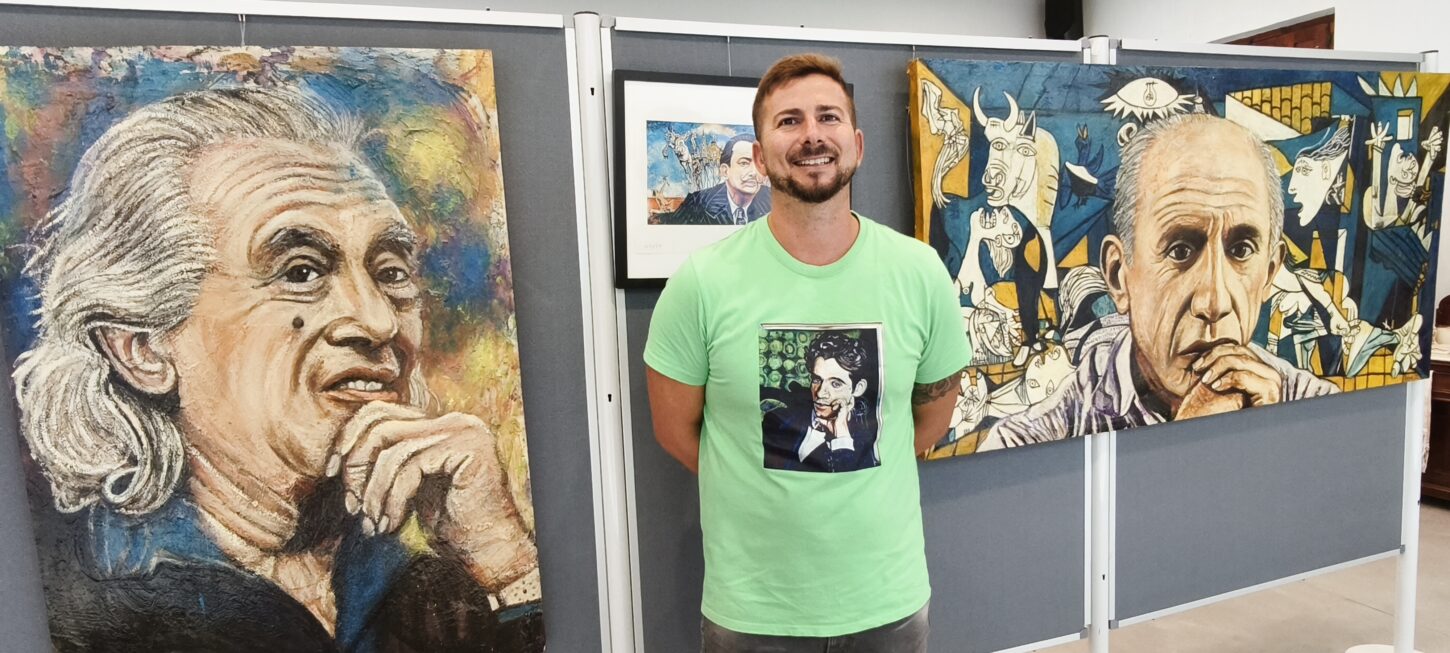
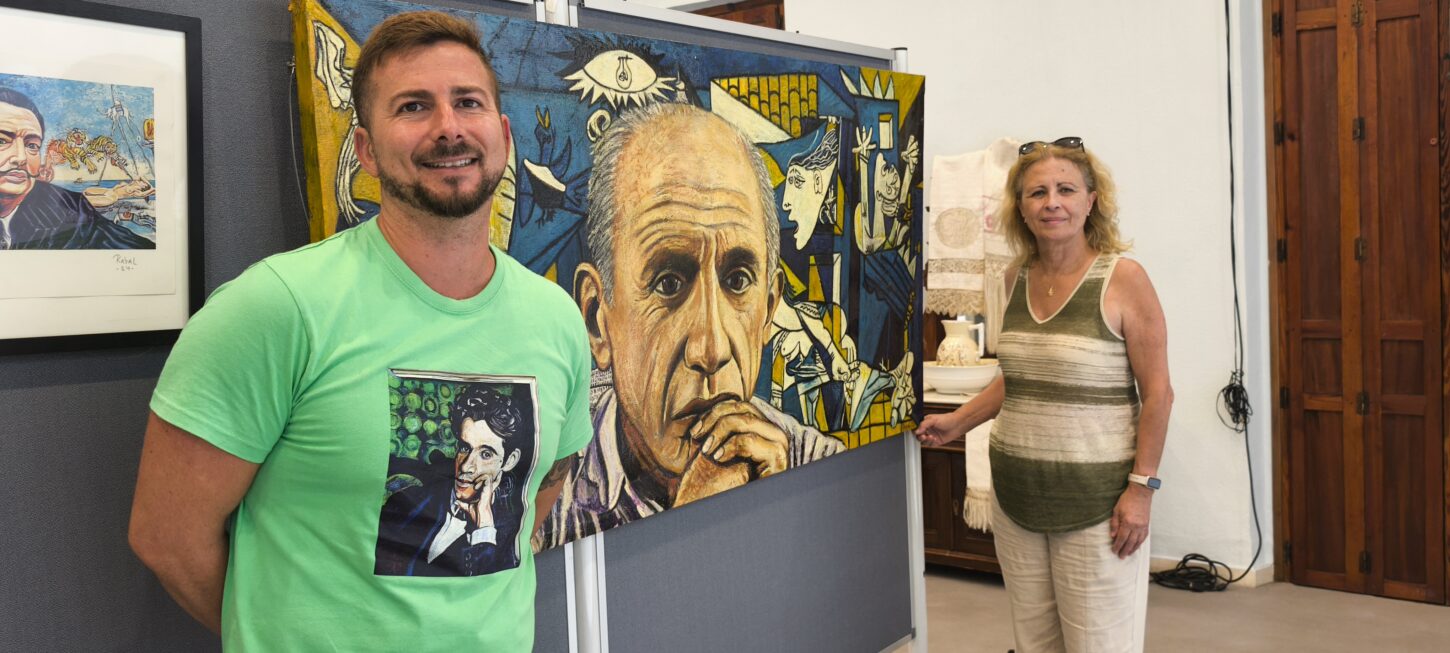
ROJALES (ALICANTE) — Some epochs refuse to die; they simply wait for a painter brave enough to summon them back. In the Main Hall of the Archaeological Museum of Rojales, the Águilas-born artist Pedro Juan Rabal has done precisely that with “Ecos del 27: Regeneración pictórica y poética” (“Echos of ’27: Pictorial and Poetic Regeneration”), an exhibition that does not merely depict the Generation of ’27 — it listens to it. The show remains open to the public until 30 October 2026.
Pedro Juan Rabal, born in Águilas (Murcia) and a graduate of Fine Arts from the Miguel Hernández University at its Altea faculty, has built a solid career deeply rooted in the culture of Spain’s southeast, its traditions and its flamenco. His work has illustrated internationally renowned festivals such as the Festival Internacional del Cante de las Minas and the Festival de Lo Ferro.
In this new phase, the artist takes a calculated risk, employing symbolic materials to portray the men and women who knew how to wrest from their own chests the feelings that lived there — turning his painting into a bridge toward our collective historical memory.
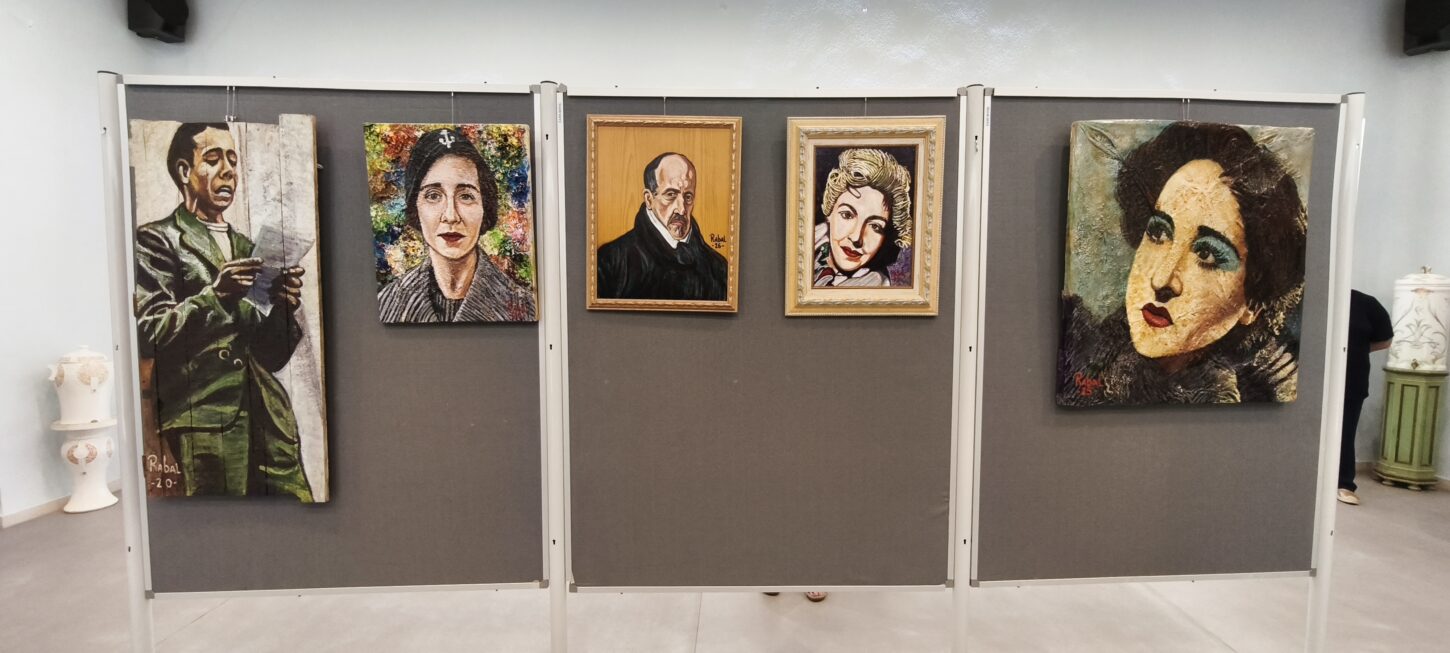
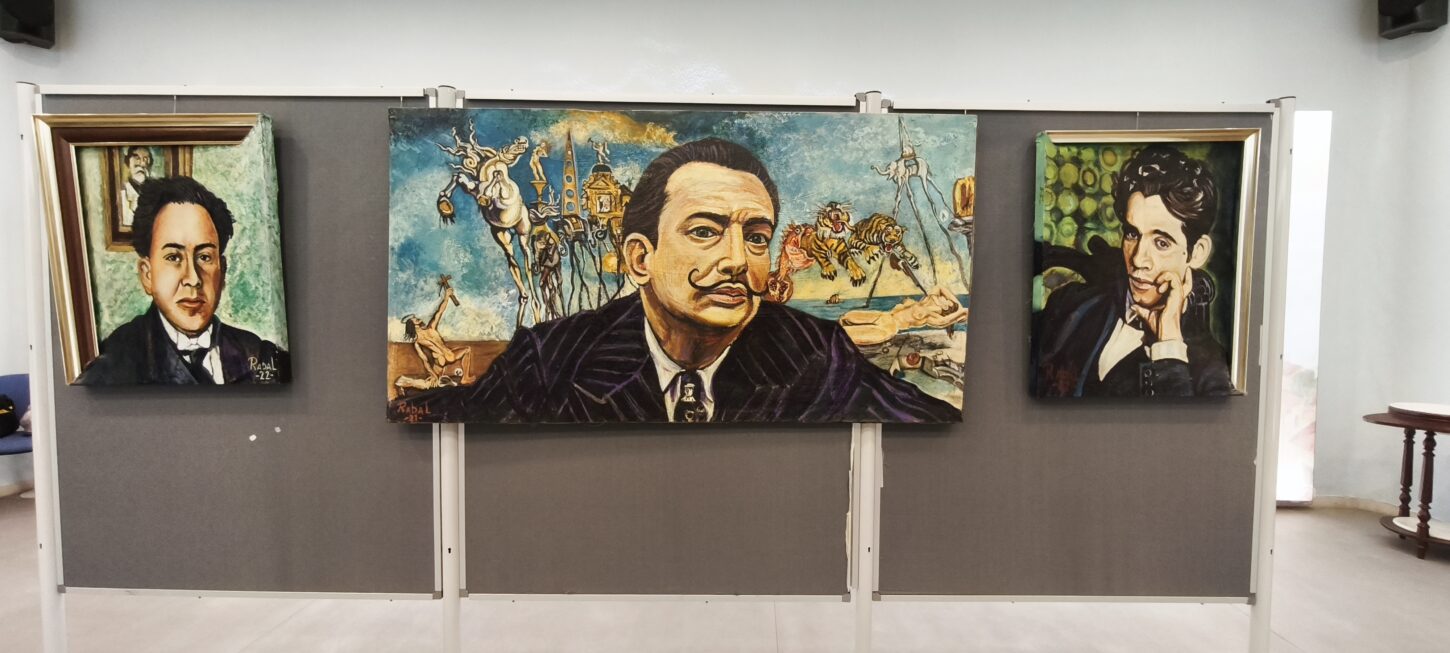
Rabal’s canvases operate like tuning forks struck against the vibrant memory of Spain’s Edad de Plata, that incandescent stretch of cultural history when poetry, painting, cinema and music seemed to breathe in unison. The exhibition braids together the aesthetic beacon of Juan Ramón Jiménez and the ethical gravity of Antonio Machado with the avant-garde ferment of the Residencia de Estudiantes, immortalising figures such as Federico García Lorca — the central image of the exhibition’s poster — alongside Rafael Alberti, Salvador Dalí, Luis Buñuel and the founding master himself, Luis de Góngora.
The journey builds toward its most wrenching register: the war-torn figure of Miguel Hernández and the vast, unshakable shadow of Picasso’s Guernica. Here, Rabal’s painting becomes elegy — a reminder that the brightest generation of Spanish creators was also among the most wounded.
One of the exhibition’s deepest convictions is restorative. Rabal devotes a fundamental pillar of the show to the women creators and intellectuals too long pushed to the margins of the canon: the painter Maruja Mallo, the alchemical Remedios Varo, the philosopher María Zambrano, and María Teresa León, guardian of Spanish patrimony under the bombs. The painter’s brush grants them the prominence history denied them — a pictorial act of justice.
The word Ecos in the title finds its fullest justification in Rabal’s tribute to flamenco. Tracing the line first drawn by Manuel de Falla and Lorca at the 1922 Concurso de Cante Jondo, the exhibition honours contemporary masters of the cante — Enrique Morente, Miguel Poveda, Carmen Linares — artists who have proven that the poets’ legacy is not dead text but a living cry, capable of regenerating itself through the quejío. It is a rare exhibition one can almost hear.
Photos credits: Artist’s archieve
Leave a Reply