

The sixth edition of the Fainplast Osvaldo Licini Prize is underway. Inspired by the visionary figure of Osvaldo Licini, the Prize was founded with the aim of supporting and promoting contemporary painting research, highlighting its most current developments and rewarding the artists who most significantly renew its language.
The six selected artists for 2026 have been announced: Thomas Braida, Cecilia De Nisco, Pesce Khete, Alessandro Roma, Caterina Silva, and Michele Tocca.
This group of artists was chosen thanks to the participation of a widespread network of contemporary art experts — including curators, critics, museum directors, collectors, and artists — from across Italy. Each participant independently put forward two nominations, according to criteria of merit and independence. The nominations were collected confidentially and anonymously, with participants unaware of the identities of others involved in the process, ensuring a pluralistic, meritocratic, and transparent approach. The sum of the votes determined the names of the artists recognized this year.
In the autumn, the name of the artist who received the highest number of nominations will be announced; they will stage a solo exhibition at the Osvaldo Licini Contemporary Art Gallery in Ascoli Piceno.
Established in 2021, the Fainplast Osvaldo Licini Prize, promoted by the Associazione Arte Contemporanea Picena together with Fainplast, main sponsor of the initiative, has over six editions involved nearly 250 professionals in the field — curators, critics, directors of institutions, journalists, and collectors — gathering almost 400 nominations. From this process, 30 selected artists have emerged, outstanding figures of the Italian and international art scene. Over time, the Prize has established itself as a reference point for identifying the most innovative practices in contemporary painting and for building an active network among artists, curators, institutions, and the public.
Andrea Valentini, President of the Associazione Arte Contemporanea Picena, stated:
“The Osvaldo Licini Prize does not end with the selection of the artists and the proclamation of the winner, but unfolds as an ongoing program throughout the year. It begins with the selection of the artists, through invitations extended to leading professionals from the art world, and continues with activities aimed at members and the local community, bringing them closer to contemporary art, to the figure of Licini, and to Italian painting: presentations, catalogues, artist residencies, and other events. The quality of the artists selected over the years, thanks to the involvement of distinguished Italian professionals, has made the Prize increasingly recognized, and this year, with great pleasure, we will have six selected artists.”
Roberta Faraotti, who together with her brother Daniele and her father Battista leads Fainplast, main sponsor of the Prize, added:
“The intuition behind creating a prize dedicated to contemporary painting in 2021 has been repaid over time by the results achieved, by the distinguished names of artists who have come into connection with the initiative, and by the collaborations built with major institutions and museums across the country. The path we have charted continues with this year’s edition, which features names of great prestige contributing to the Prize’s growth.”
The Selected Artists
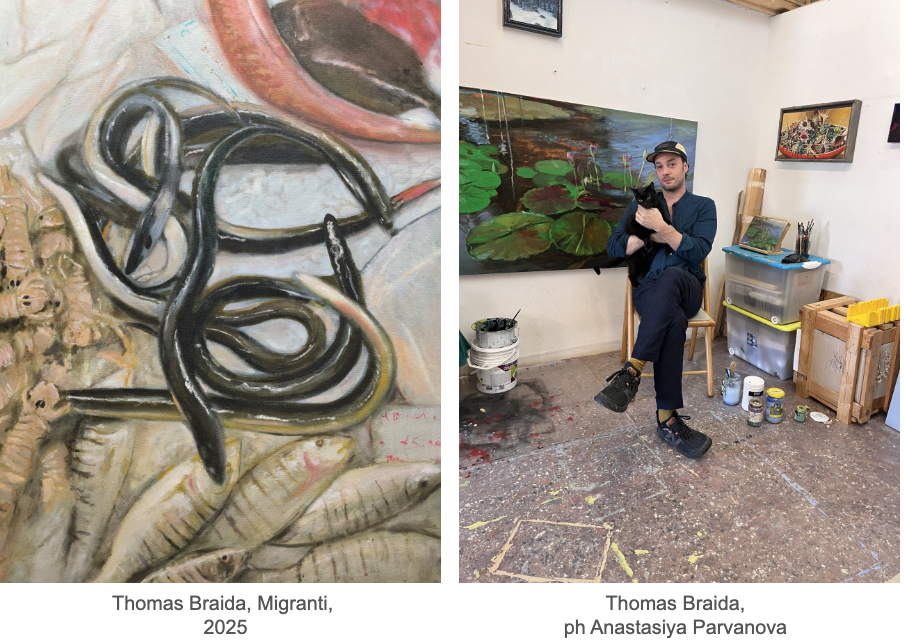
Thomas Braida pursues a painting practice that springs from heterogeneous sources, ranging from mythology to popular culture and a trash, outsider aesthetic. His language, expressionist in origin and tinged with grotesque irony, weaves together high and low, literary and visual references in a defamiliarizing, magical realism. Braida conceives painting as an act of simplifying reality and, at the same time, as an almost alchemical process in which color, mark, and subject converge in a sudden “click” of harmony. The result is a body of work that rejects small, closed worlds in favor of new paths — capable of making large and small formats coexist and of generating alternative realities rather than documenting the existing one.
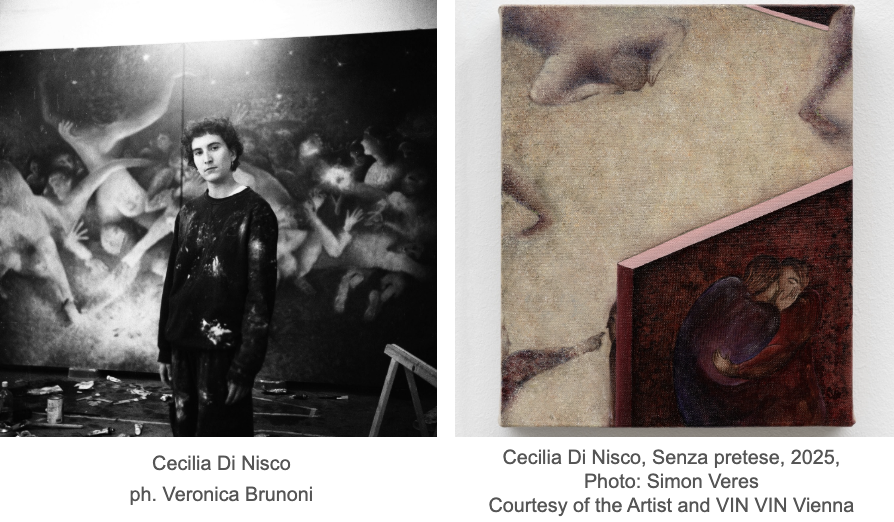
Cecilia De Nisco’s pictorial language speaks through intentional blurring, shadows, grain, and pixelation — all means of reflecting on the phenomenologies of desire. Fragmentation, the obstruction of sight, and the blurring of focus serve as tools to reflect on the complexities of affective regimes and the constant negotiation of intimate power relations. Playing with visual “noise” and with the gaze, the artist creates images in which desire and intimacy attract and, at the same time, elude us.
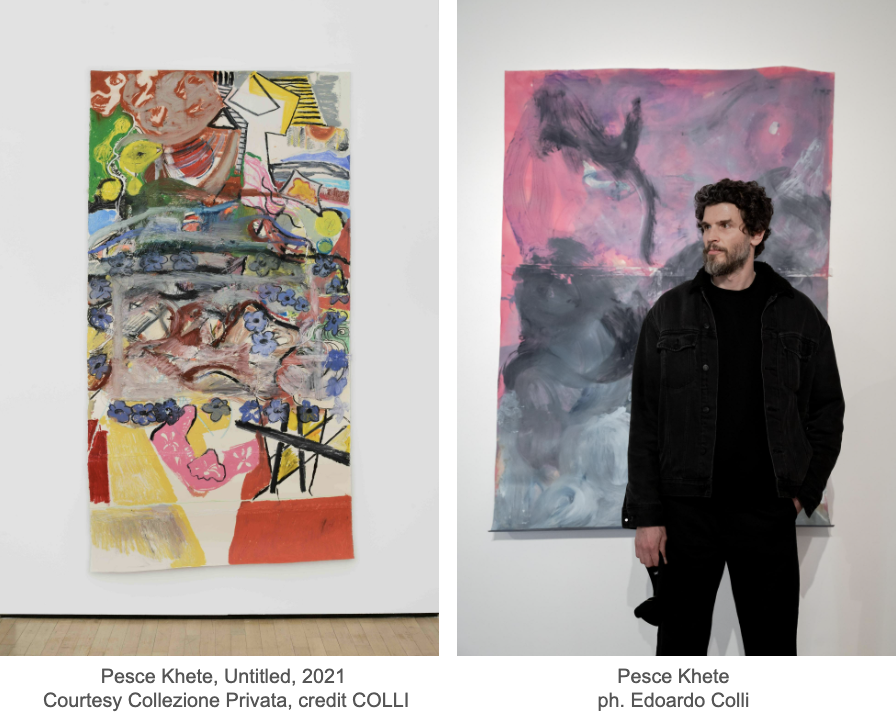
Pesce Khete’s painting emerges from a continuous friction between control and abandonment. Khete almost always works in a physical condition that rules out any overall view in advance, allowing him to proceed through successive gestures. This system, which might seem instinctive and gestural, is in fact born of an extremely controlled method built on self-imposed rules, limited time frames, and reduced portions of space. From this emerges a very close relationship between painting and involuntary memory, whereby images, art quotations, and autobiographical fragments resurface on the canvas without ever being sought, and are then “isolated” so as not to turn into narrative.
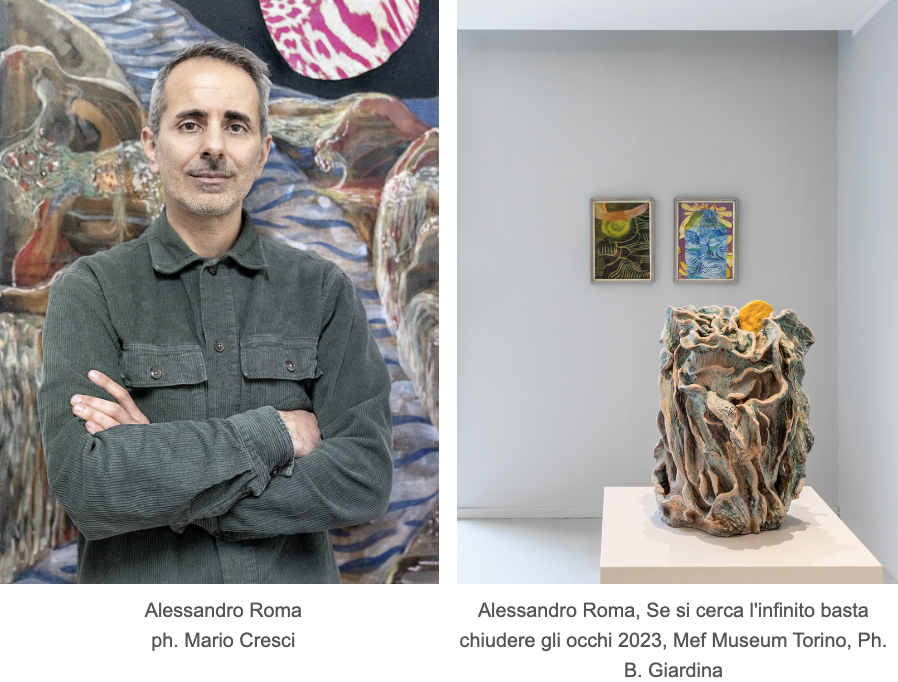
Alessandro Roma’s research is characterized by a predominantly pictorial approach, rooted in his academic training and early career. Recently, Roma has explored a range of techniques — fusing, printing on fabric, ceramics, and collage. This has led to a completely new repertoire of interior landscapes, drawn both from real experiences and literary sources, transforming his imagination into something tangible and accessible to the viewer.
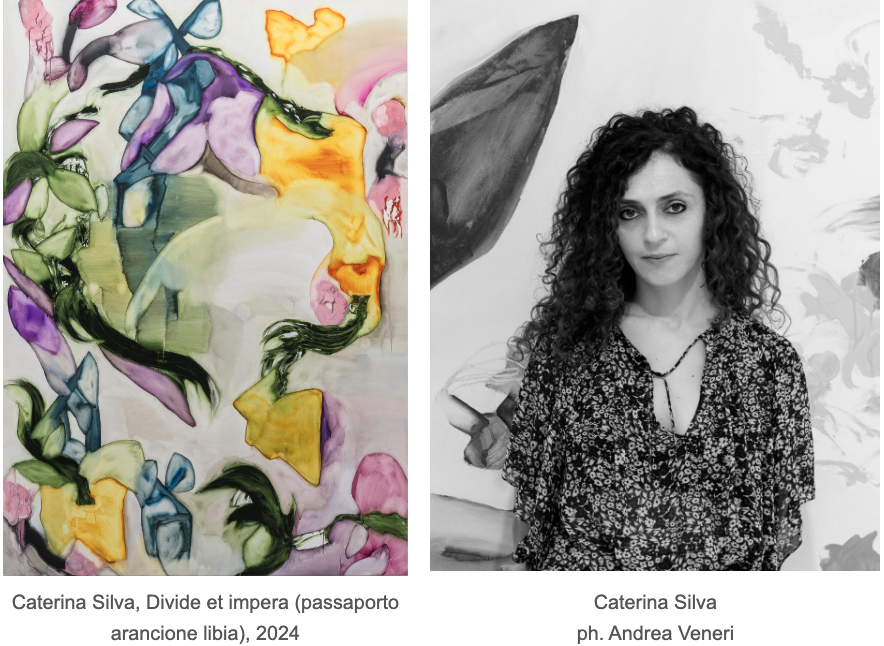
Caterina Silva builds her artistic language around a radical exploration of the limits of language and representation. Her works take shape from a personal, constantly evolving alphabet of distinctive, non-figurative forms that refuse any formal closure, opening instead into spaces of ambiguity, silence, and resistance to fixed meaning. Through this process, the artist calls into question the structures of power that typically bind language to authority and control. She does so with an abstract, strongly gestural brushstroke, exploring the potential of means of communication that cannot be codified or reclaimed by others for purposes of control.
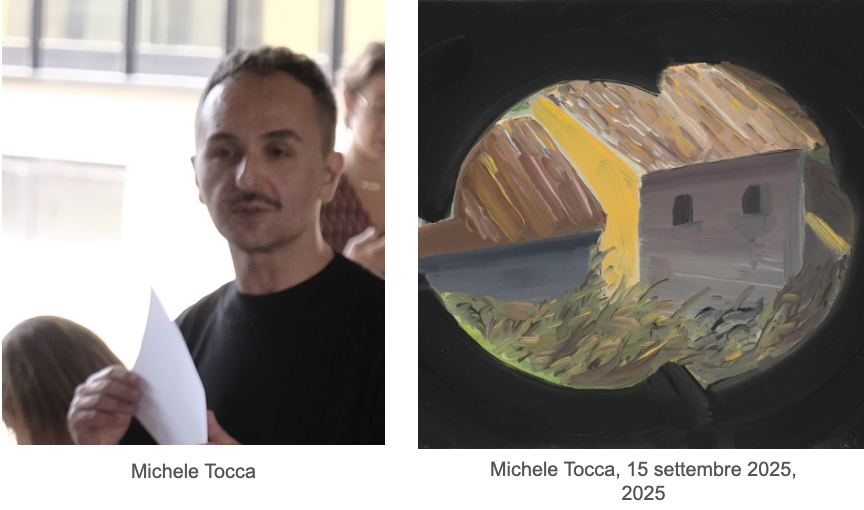
Michele Tocca pursues a discreet yet resolute practice, rooted in an intimate relationship with places, domestic environments, and walking. He paints from life, almost always outside the studio, in a condition of vulnerability that exposes the painting to the cadences and circumstances of the physical world. Spare and tactile, made of elementary and measured gestures, Tocca’s painting returns to recurring yet never identical phenomena that exist only at the moment they occur: shifts of light, weather, organic formations, the minimal traces of ordinary activity. In their infinitesimal variations, these circumstances never become the subject of the paintings, but rather constitute the very conditions of their making.
The Selecting Professionals
The contemporary art experts who selected the artists are:
Paola Angelini, Andrea Barzaghi, Raffaele Bedarida, Ilaria Bonacossa, Paola Bonani, Elena Bordignon, Camilla Bruni, Marino Capretti, Barbara Casavecchia, Elia Castello, Luca Cerizza, Caliandro Christian, Adelaide Cioni, Stefano Coletto, Eva Comuzzi, Mauro Covacich, Davide Daninos, Michele Dantini, Flavio De Marco, Sara Dolfi Agostini, Adrienne Drake, Piero Ducci, Roberta Faraotti, Milovan Farronato, Matteo Fato, Marta Federici, Fabio Frasca, Federico Giannini, Sebastiano Impellizzeri, Denis Isaia, Andrea Lombardinilo, Angela Maderna, Beatrice Meoni, Paola Nicolin, Luigi Presicce, Emanuela Pulvirenti, Leonie Radine, Andrea Salvino, Alessandro Scarabello, Massimiliano Scuderi, Marco Senaldi, Marta Silvi, Alex Urso, Italo Zuffi.
Leave a Reply