

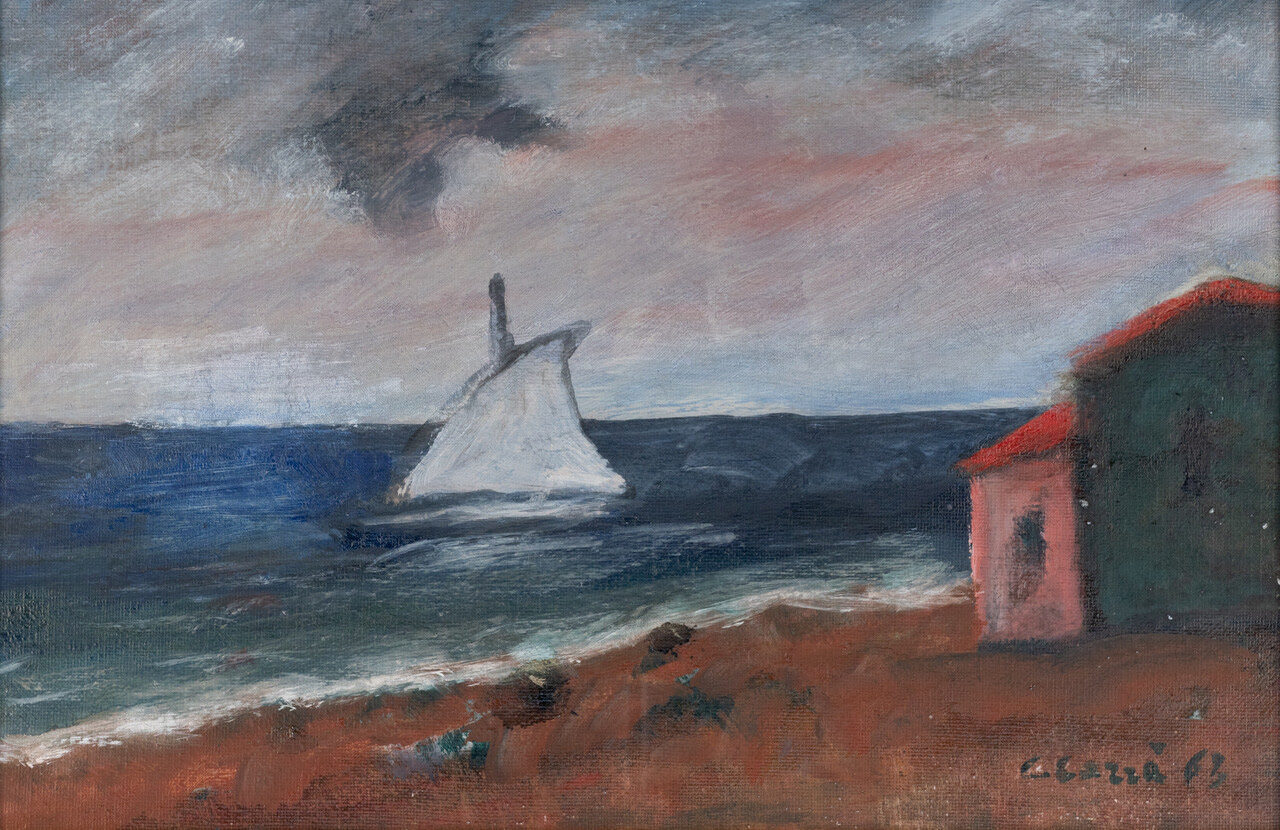
On the occasion of two important anniversaries — the 145th anniversary of his birth (1881) and the 60th anniversary of his death (1966) of Carlo Carrà — the Municipality of Quargnento, the painter’s birthplace, under the patronage of the Region of Piedmont, the Regional Council of Piedmont and the Region of Lombardy, presents the exhibition CARLO CARRÀ, ENZO CACCIOLA, @parallel.fbx. From the Twentieth Century to the Contemporary: Colour Becomes Matter and A.I., curated by Luigi Benzi, Alberto Fiz and Rino Tacchella. The exhibition will be on view from 26 September to 25 October 2026 at the Auditorium della Trinità in Quargnento (AL), a recently restored space housed in the former Church of the Most Holy Trinity.
The strong bond between Carrà and his native town of Quargnento is attested already by his middle name, Dalmazio — one of the town’s patron saints — with which he signed, together with Boccioni, Russolo, Balla and Severini, the Manifesto of Futurist Painters of 1910 as “Carlo D. Carrà.” It is from the Monferrato region, in fact, that Carrà drew his inspiration, so much so that, for many critics, this rootedness is so profound that it resurfaces as an ancestral imprint even in his paintings of other landscapes. It is in Quargnento, moreover, that the oldest traces of his hand are to be found: in the attic of the family home a tempera wall decoration still survives, painted when he was barely 12 years old, and it is here too that, in 1900, having returned from his stays in Milan, London and Paris, Carrà painted “La strada di casa” (“The Road Home”): a key work, read by scholars as the true incipit of his catalogue, which opens the exhibition.
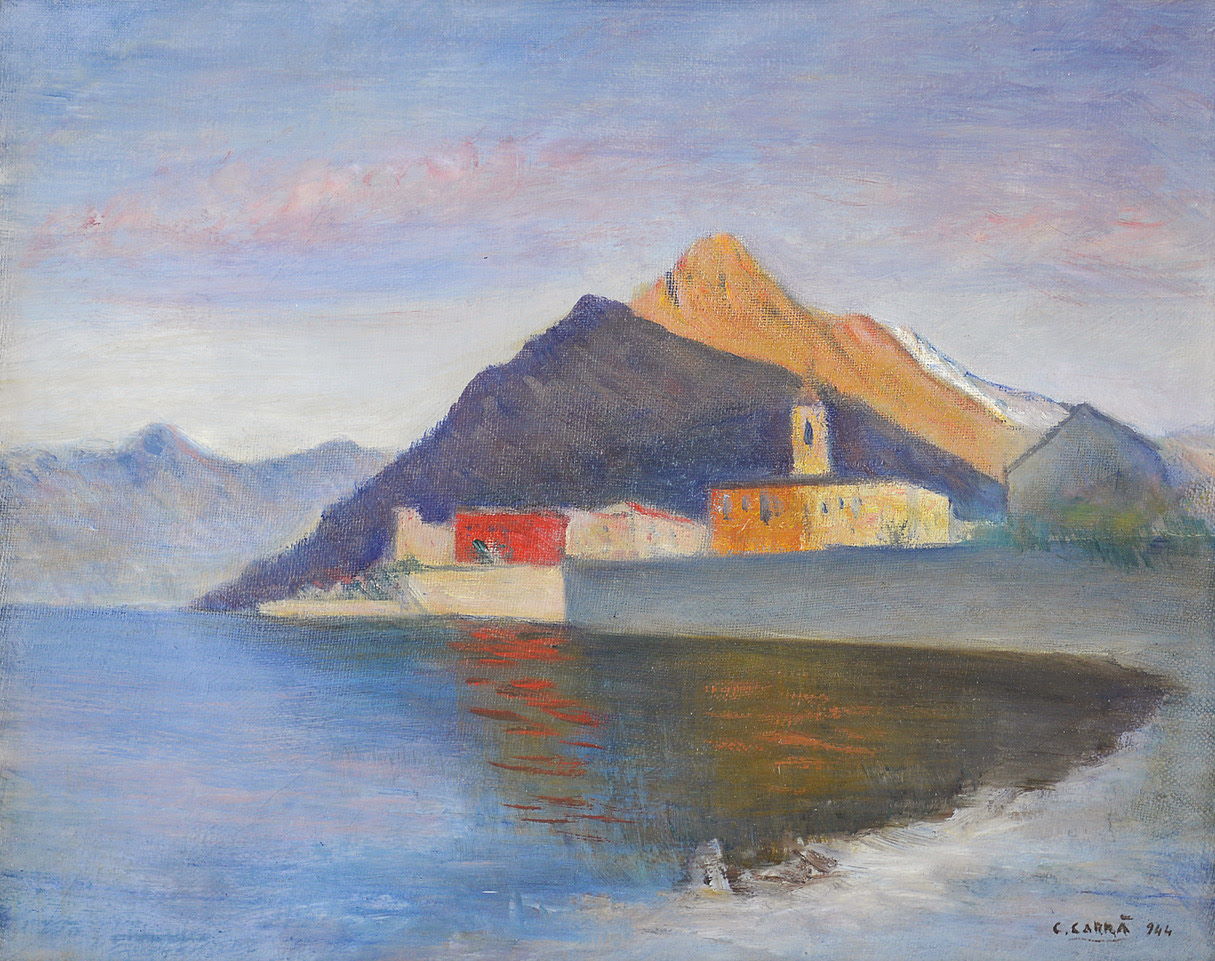
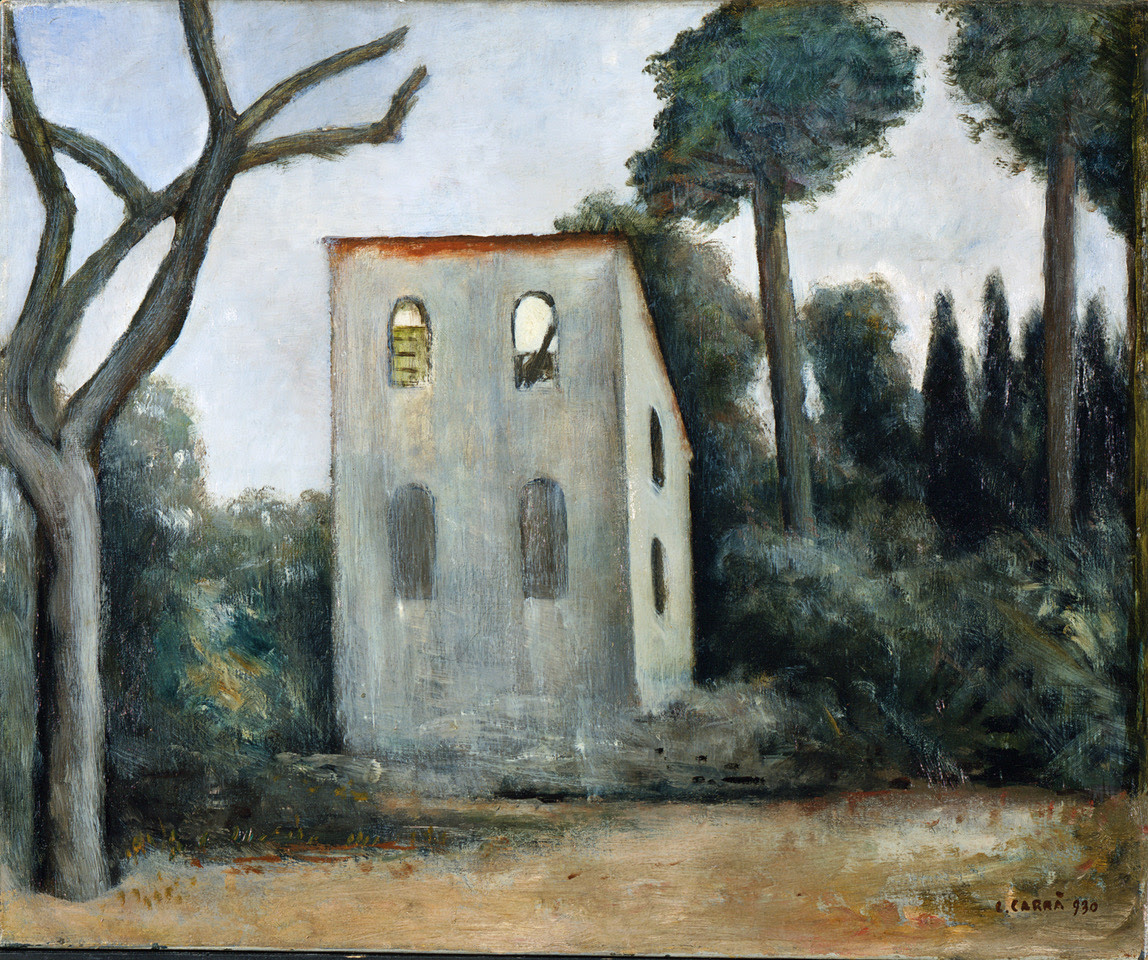
A land of painters and of the arts, Quargnento has always recognised the greatness of its most celebrated fellow citizen through numerous exhibitions dedicated to him, not least Carlo Carrà da Quargnento. 1881–1966 cinquant’anni dopo, an exhibition/event of national significance held on the 50th anniversary of the painter’s death. Today, the exhibition CARLO CARRÀ, ENZO CACCIOLA, @parallel.fbx. From the Twentieth Century to the Contemporary: Colour Becomes Matter and A.I. returns to celebrate the figure of the Master — not through a traditional monographic survey, but by placing his work alongside that of a contemporary artist, Enzo Cacciola, among the best-known protagonists of Analytical Painting, within a project that also involves the most current research created with artificial intelligence by the artist @parallel.fbx.
The exhibition brings together two artists who, at first glance, would appear to stand at opposite poles in terms of era, method and language. On the one hand Carrà, who moved as a protagonist through the avant-gardes of the first half of the century; on the other Cacciola, who in the 1970s experienced the conflicts of a painting in search of a path far removed from any representational hypothesis. Where the divergences are evident, however, the exhibition brings out the subtlest and most unexpected convergences.
The first, decisive point of encounter between the two artists is the choice to engage with painting as such — the constitutive matrix to which Analytical Painting (the heterogeneous movement born in Italy between the late 1960s and the 1970s, of which Cacciola was among the most coherent interpreters) never wished to renounce, aiming instead at a linguistic autonomy in which the artefact might recover its centrality. Yet it is precisely here that the most profound difference also emerges, as Alberto Fiz, one of the exhibition’s curators, explains: “Cacciola creates a space of painting, while Carrà experiments on painting, yet both interrogate the same medium without breaking the subtle thread that binds them: on the one hand tautology, the coincidence between elements and the operative process; on the other, the continuous transformation of the relationship between surface, colour and matter across the passages from Divisionism to Futurism, Primitivism, Metaphysical Painting and the return to tradition.”
The exhibition’s title encapsulates precisely this common territory, explored with opposing tools. In Carrà, the relationship between colour and matter passes through the care taken in preparing the canvas, the innovative use of collage, and finally the most radical gesture, the manifesto “La pittura dei suoni, rumori e odori” (“The Painting of Sounds, Noises and Smells,” 1913), which opens painting to a synaesthetic dimension. In Cacciola the principle is radicalised: there is no longer a before and an after, but an absolute convergence with the object-painting, which each time assumes its own identity, modifying its state. In Cementi, for example, colour derives directly from the material employed and from its application.
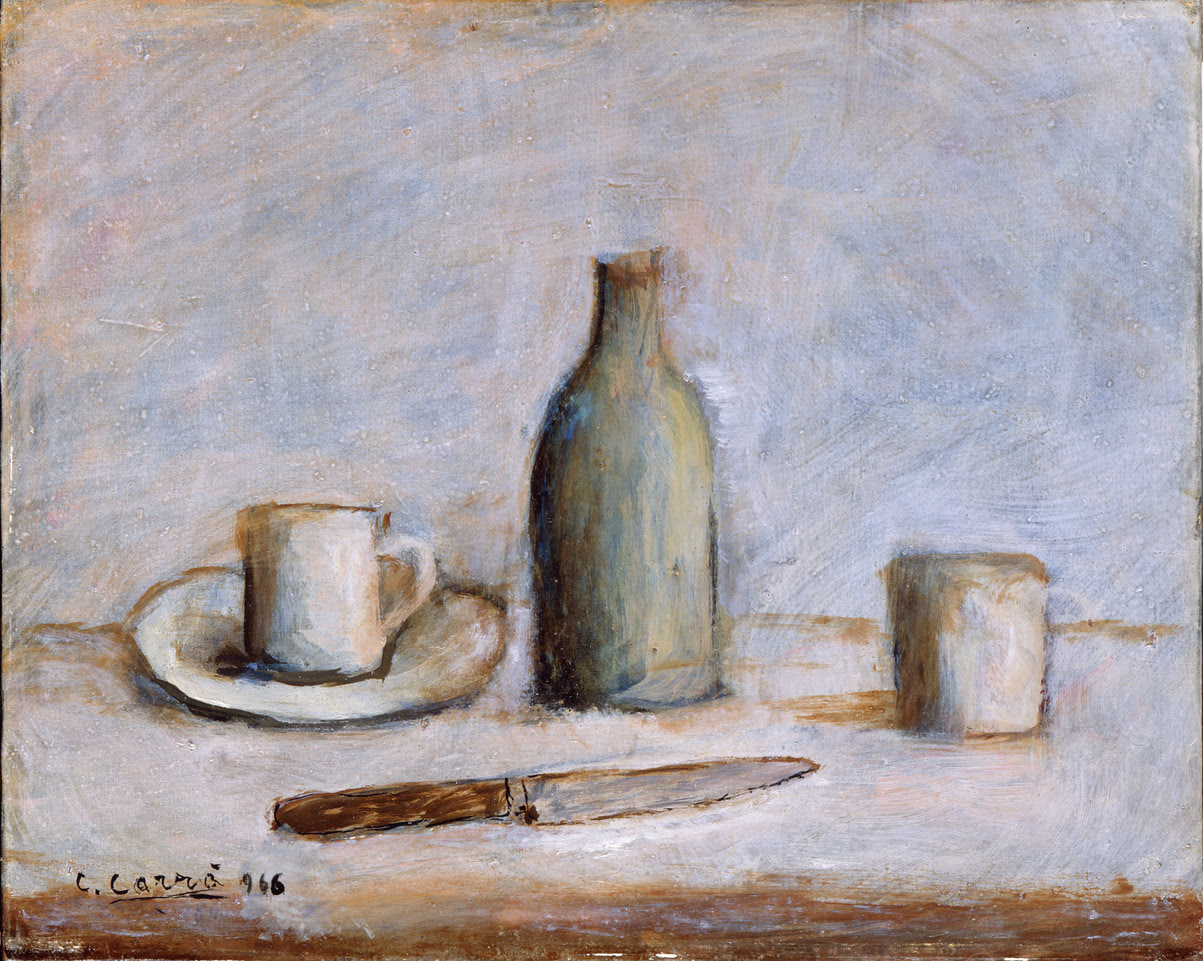
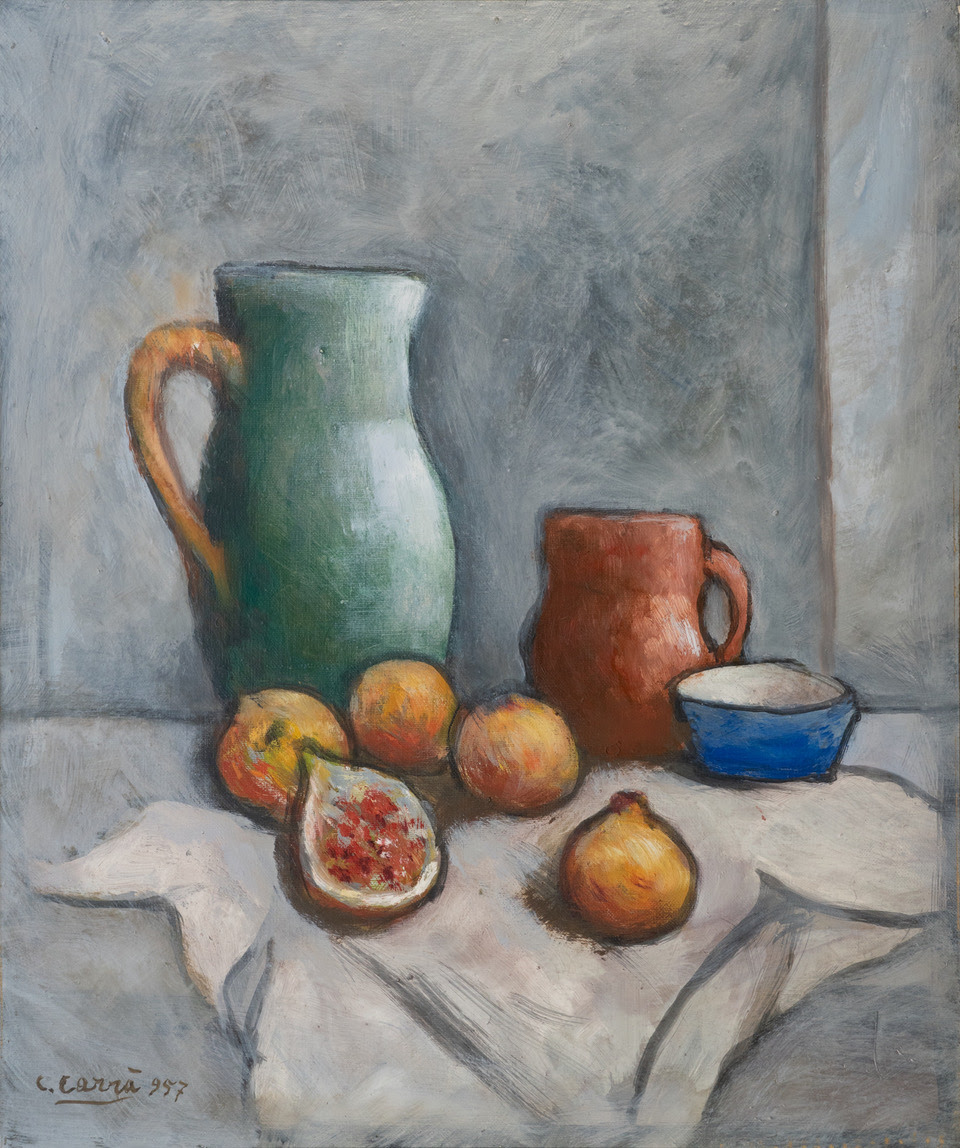
This confrontation takes concrete form in the exhibition design: twenty works by Carrà, most of them previously unseen, dialogue with an equal number of works by Cacciola. For Carrà, a synthesis is proposed spanning 1900 to 1966, including the celebrated Lacerba e bottiglia of 1914 — made available by the Fondazione CRAL of Alessandria — in which he introduced the technique of collage in Italy for the first time after seeing the works of Braque and Picasso in Paris, through to the 1966 oil on canvas Natura morta con bottiglia e chicchera (“Still Life with Bottle and Cup”) that closes the exhibition, passing through the various avant-garde movements — Futurism, Valori Plastici, Metaphysical Painting, Novecento — of which he was one of the protagonists in the first half of the last century. As for Cacciola, the exhibition explores the contents of his research, beginning with Cemento e Asbesto of 1974, which anticipates the celebrated Cementi series of 1975 shown two years later at Documenta 6 in Kassel, through to the Sabbie (Sands) of the 2000s, drawn from his travels (the Sahara, Argentina and Panama among his destinations) and laid on the canvas using his hands alone. The works of the two artists are displayed on opposing panels, united by the same tonalities: Carrà’s greys, blues and pinks respond to Cacciola’s chromatic matter. “The panels placed on the two sides, one occupied by the works of Carlo Carrà and the other by those of Enzo Cacciola, interact, confront and converse with one another through certain chromatic tones present in the works of both, allowing a particularly eloquent and specular comparison between the colours used by Carrà in works made in the first half of the last century and those of the early 1970s by Cacciola, who began his research in line with other European artistic movements such as Supports/Surfaces in France and Radical Painting in Germany,” says Rino Tacchella, curator of the exhibition.
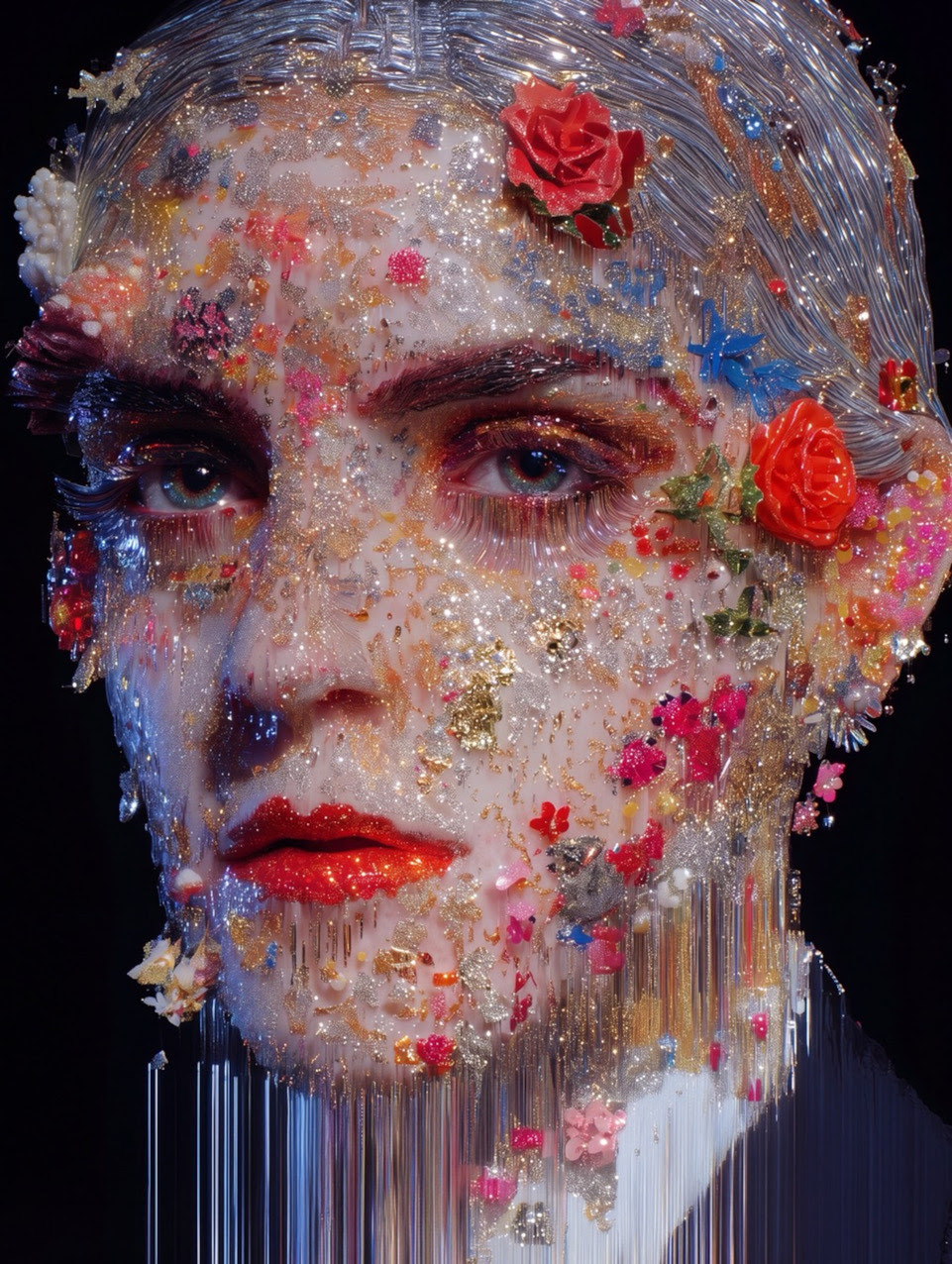
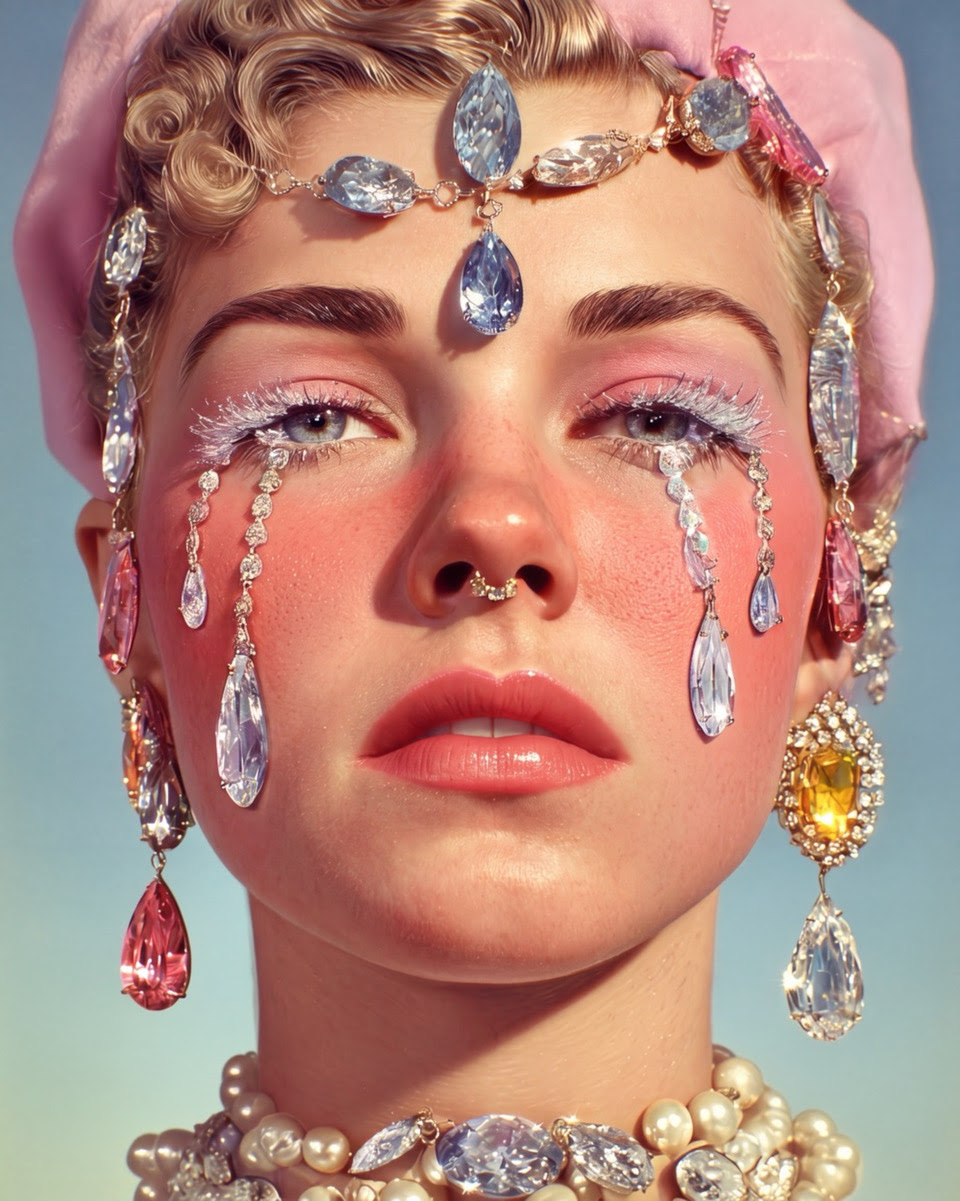
Completing the exhibition itinerary is a series of works created with artificial intelligence by the young artist @parallel.fbx, including a video directly inspired by Carlo Carrà. A choice born of a hypothesis on the part of the organisers: if Carrà — a curious experimenter with every novelty throughout his life — were still with us, he would hardly have remained indifferent to the various strands into which artificial intelligence today branches out. @parallel.fbx explores reality from new and unusual perspectives, through a visual language that unites irony, research and critical spirit. His works address complex themes such as power, war, solitude, depression and self-esteem, becoming mirrors of the contradictions of a society that is ostentatious and hyperconnected, yet at the same time fragile. In the exhibition he presents portraits in which material is digitally translated: fabrics, ceramics, metal, light, colour and site-specific installations become surfaces through which to interrogate identity, perception, mythology, ontology and new forms of experience.
“On the sixtieth anniversary of Carrà’s death, the municipal administration pays homage to him by highlighting the genius of the Master from Quargnento and the contemporaneity of Enzo Cacciola, one of the greatest exponents of Analytical Painting, characterised by continuous artistic research into matter and cement, with an eye to the future that welcomes the radical contemporaneity of @parallel.fbx and his art generated with Artificial Intelligence,” concludes Luigi Benzi, third curator of the exhibition, Mayor of Quargnento and President of the Province of Alessandria.
The exhibition is accompanied by a catalogue which, together with the works on display, contains many photographs of Carlo Carrà and Enzo Cacciola that highlight the human side of the artists — their family affections and their passions. Completing the volume are a brief biographical account of the artists and essays by Alberto Fiz and Rino Tacchella.
Photo credits: Auditorium della Trinità, Quargnento (AL)
Leave a Reply