

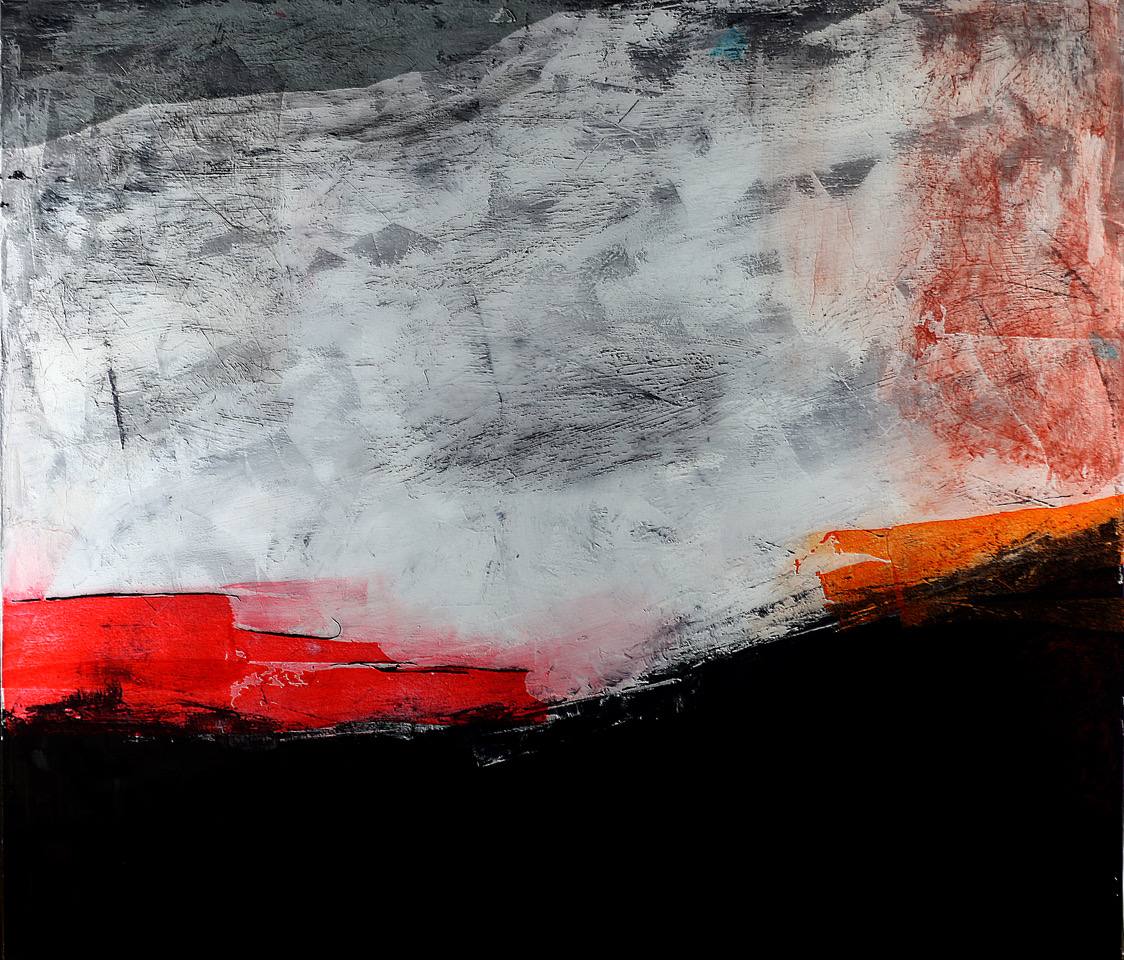
Every artist carries the geography of their origins inside them. For Florez de Uria, born in Madrid in 1960, that geography is one of granite, ochre dust and the incandescent light of the Spanish meseta — a landscape that has always demanded boldness from those who would paint it. Spain has given the world a lineage of painters who refused restraint: the tortured blacks of the Castilian tradition, the surreal ferment of Dalí, the sober gravity of Antonio López. Into this lineage — not by imitation, but by temperament — enters Florez de Uria, a self-taught, multidisciplinary painter whose career now spans nearly five decades.
His story begins, fittingly, in the very heart of Spanish institutional life, at the First Young Painters Competition held in the former Casa de Correos in Madrid — the historic seat overlooking Puerta del Sol, the symbolic kilometre zero of Spain. There is something almost poetic in it: an artist beginning his journey at the zero point of his country’s map, as if painting and nation were destined to travel together in his work.
What distinguishes Florez de Uria is not merely longevity but the manner of his formation. He is, in the truest sense, an autodidact — an artist shaped not by academic doctrine but by work in art academies and studios, by decades of experimentation, reflection and continuous evolution. He pursued painting alongside other professional activities, refining his craft with the patience of someone who understands that art is not a sprint but a lifelong conversation with the medium.
For Florez de Uria, artistic development has been a process of exploration rather than adherence to a fixed formula. His work has passed through different stages and periods, each one contributing to an increasingly individual visual identity. This is the hallmark of the painter who answers to no school: an evolution that reflects an ongoing dialogue between experience, intuition and the search for new possibilities within the pictorial medium.
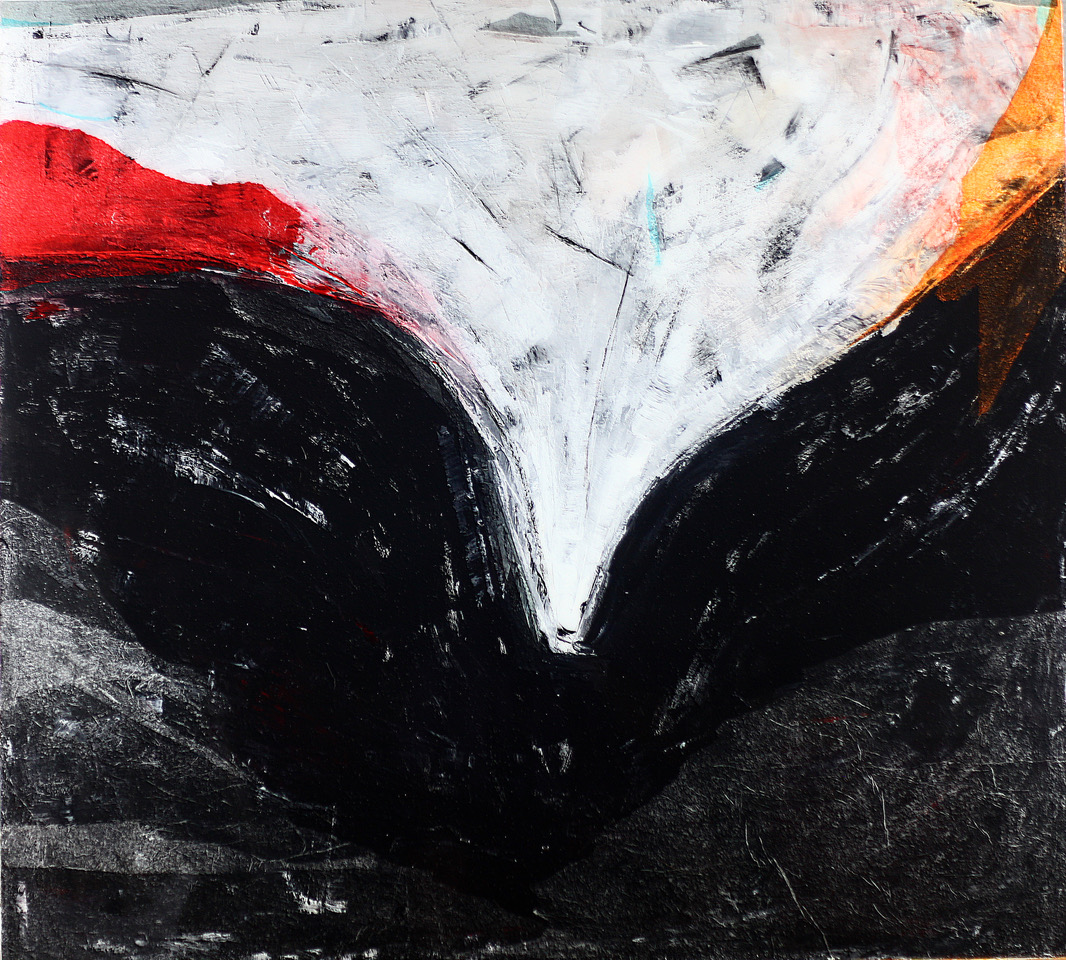
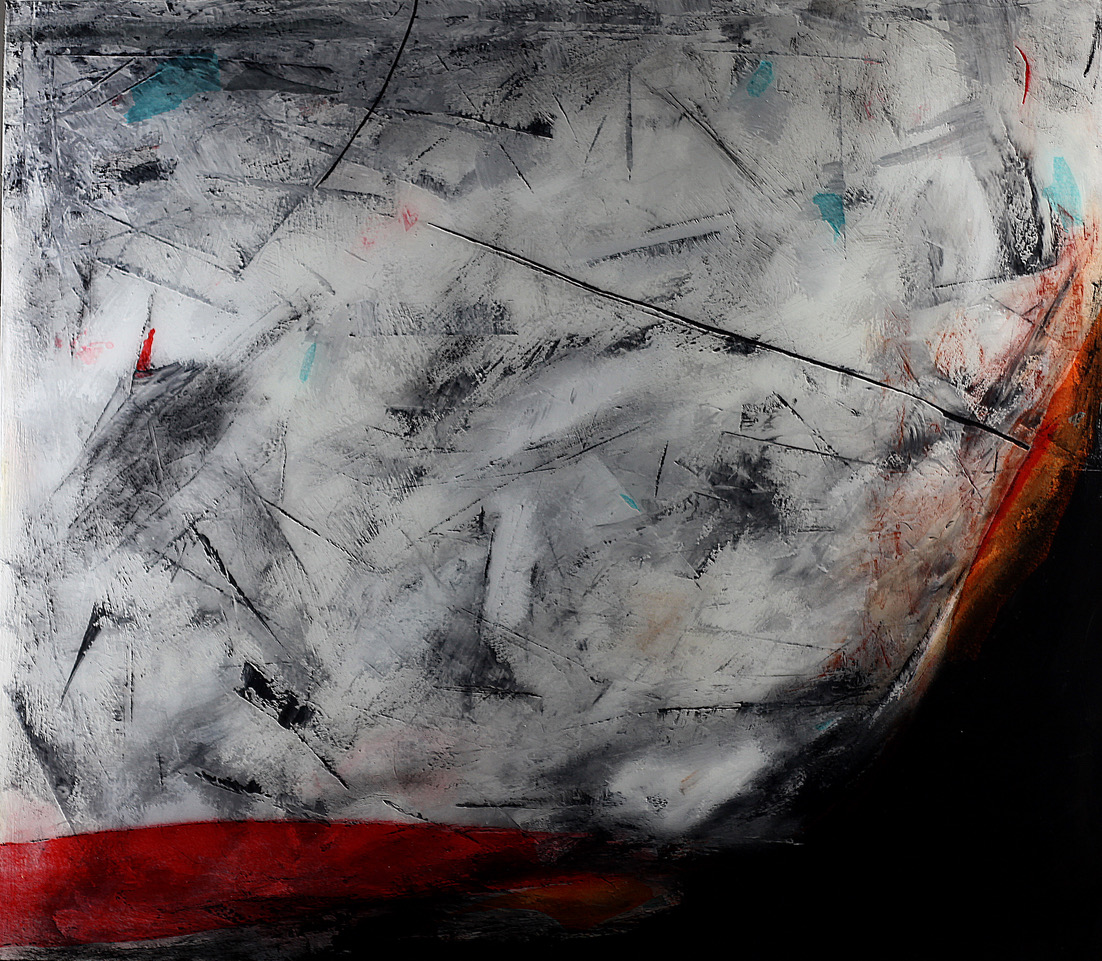
There is a deeply Spanish quality to this independence. Spain’s greatest artistic contributions have often come from those who broke with convention rather than those who mastered it — from El Greco’s elongated saints to Goya’s Caprichos. Florez de Uria belongs, in spirit, to this tradition of stubborn creative freedom. His practice is defined by a commitment to personal expression and by the freedom to explore painting beyond established boundaries.
Today, at the height of his creative maturity, Florez de Uria has given a name to his current research: Emotional Entropy — a series that stands among the most intellectually compelling bodies of work in contemporary Spanish abstraction. Drawing on the concept of entropy as a way of understanding disorder, randomness and chaos, the artist investigates how these forces emerge throughout the process of creating an abstract painting. “Chance and unpredictability become active elements in my work,” he explains, “allowing the painting to evolve through a continuous dialogue between spontaneous processes and deliberate artistic intervention.”
Here, thermodynamics meets the soul. Entropy — the slow, inevitable drift of all systems toward disorder — becomes a metaphor not only for matter but for emotion itself. The artist’s statement is strikingly lucid: “The series also explores the emotional dimension of abstraction, considering both the artist’s experience during creation and the viewer’s response to the finished work. Art can disrupt familiar perceptions, evoke uncertainty and generate feelings of disorder or tension.” And further: “Through Emotional Entropy, I seek to bring these elements together, examining how chaos, artistic intervention and emotion interact to shape both the artwork and the experience of those who encounter it.”
One hears, in these words, echoes of a question that has haunted abstract painting since Kandinsky: can colour and form carry feeling as directly as the face carries grief? Florez de Uria’s answer is affirmative — but with a twist. It is precisely the loss of control, the surrender to chance, that opens the door to authenticity. The Spanish painter does not impose order on chaos; he negotiates with it, lets the canvas breathe, and allows the unexpected to co-author the work.
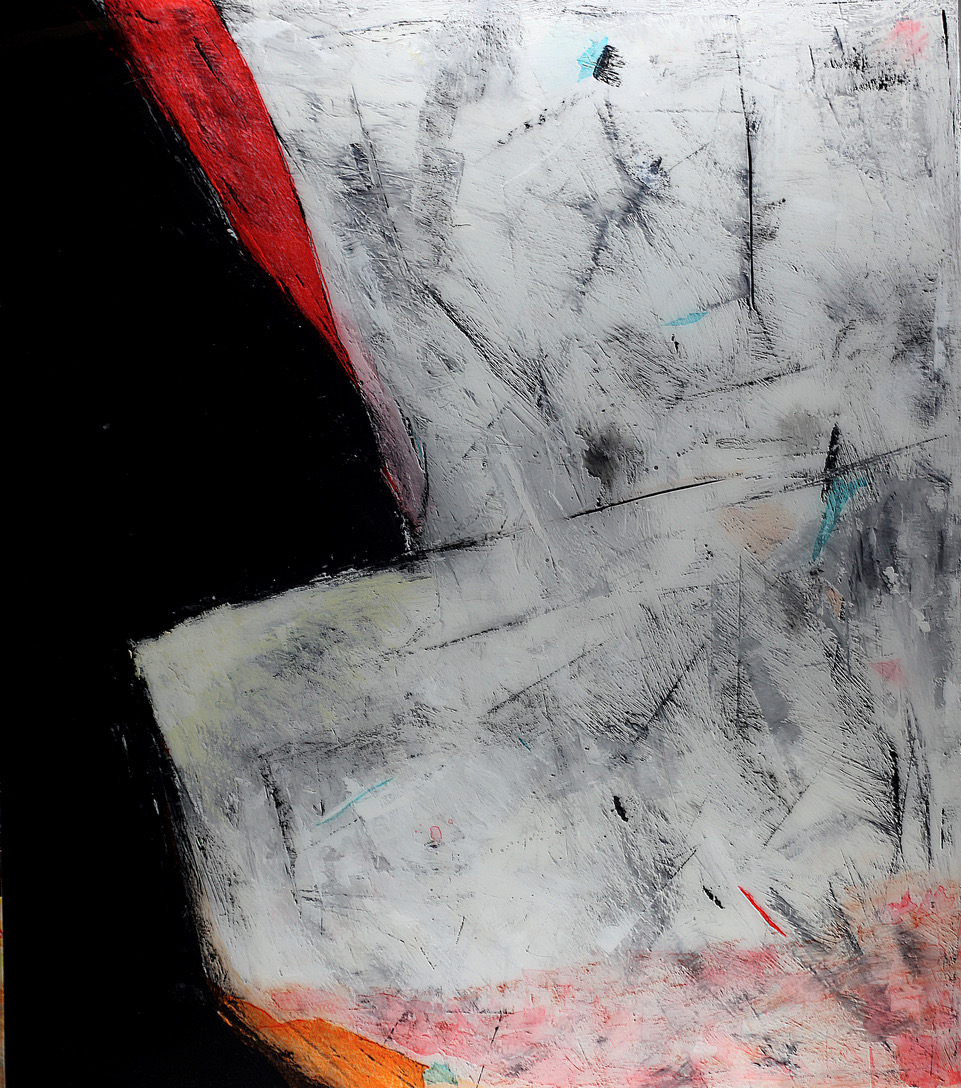
If the soul of his work belongs to the studio, the record of his achievement belongs unmistakably to Spain’s artistic geography. Florez de Uria’s career reads like a cartography of the national competition circuit: Ciudad de Alcázar, Casimiro Baragaña, Virgen de las Viñas, Evaristo Guerra, Francisco Pradilla — the names of old masters and old towns, the backbone of a country that has never stopped painting. His honours include first prizes at the Villa Campo de Criptana national competition and at the AEPE Abstract Art Salon in Madrid, the venerable Asociación Española de Pintores y Escultores, together with acquisition awards, second prizes and honourable mentions earned in recent seasons.
His solo exhibitions have carried him from Madrid to Tarancón, from Bilbao to Ceuta and Tres Cantos, while group shows have placed his work in galleries and cultural institutions across the peninsula — Murcia, Gijón, Córdoba, León, Getxo. Art fairs have taken his painting beyond Spain’s borders, to Bilbao, Málaga and Toulouse, as well as to Madrid itself. He is a member of AVAM and VEGAP, and all of his works are registered — the quiet meticulousness of an artist who treats his legacy with the same seriousness as his canvas.
The journey that began at the Casa de Correos now enters a new chapter — and it is a chapter rich with symbolism. Florez de Uria will participate for the first time in All Art Fair in Santiago de Compostela, presenting a selection of his works in a dedicated showroom. There is an almost mythic appropriateness to the venue: Santiago de Compostela, the endpoint of the Camino de Santiago, the city toward which pilgrims have walked for a thousand years. An artist whose entire life has been a pilgrimage through painting arrives, at last, at the great crossroads of Spanish spirituality and culture.
Shortly after, approximately twelve of his works will go on display at the Max Center in Bilbao for around two months — a return to the Basque capital where he exhibited before, and a city whose own artistic identity, forged in the shadow of the Guggenheim, has made northern Spain a destination for ambitious abstraction. The Emotional Entropy series will be central to these presentations, with several works already completed and others still in development — a series that, by its very nature, remains open, incomplete, in motion.
There is a quiet heroism in Florez de Uria’s career. No scandal, no shortcut, no sudden fashion — only the slow accumulation of decades at the easel, a self-taught discipline worthy of the Spanish masters’ stubbornness, and now a mature philosophy that embraces disorder itself as a creative ally.
In Emotional Entropy, he has found the perfect metaphor for his own trajectory: a life in which chaos and intention, chance and craft, Spanish soil and universal abstraction, have been continuously renegotiated — stroke by stroke, year by year, since that first young painters’ competition at kilometre zero of Madrid. As the paintings travel from Compostela to Bilbao this winter, they carry with them something that cannot be registered with VEGAP or awarded a medal: the accumulated emotion of a Spanish painter who never stopped exploring. In a world increasingly obsessed with control, Florez de Uria reminds us that art begins precisely where control ends — in the beautiful, unstable, luminous entropy of feeling.
Photo credits: From artist’s archieve
Leave a Reply