

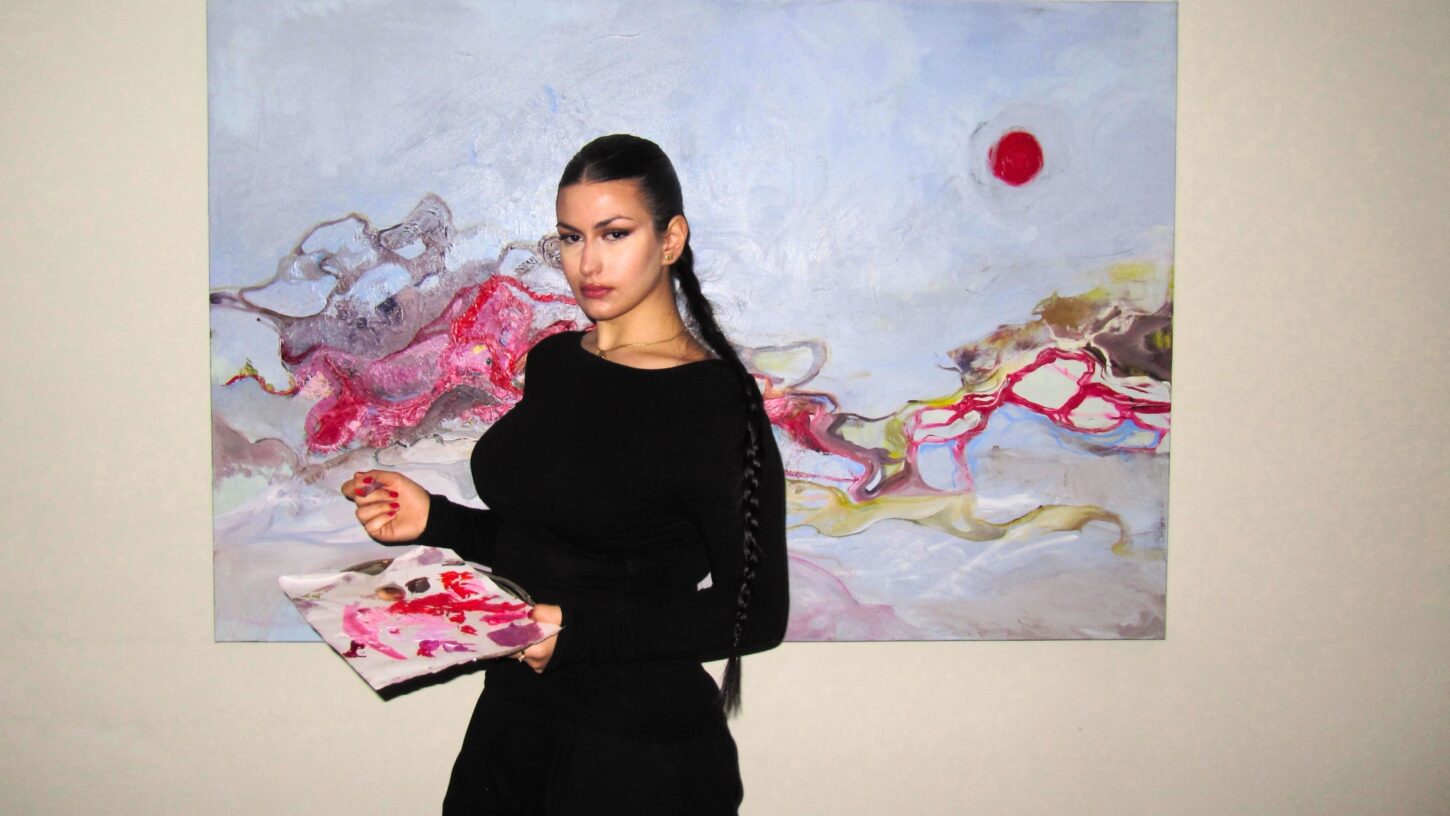
Before anything else, it is the colour that speaks. In a painting by Diyara, the ochres, mineral blues and deep oxidised greens arrive first — announcing a terrain long before any mountain resolves into a mountain, any figure turns its gaze. Only then does the viewer understand what kind of place this is: a geography that has been revoked and rebuilt at once, where mountains are thresholds and figures return our look with the composure of beings who know they are being remembered rather than merely seen. In the work of Diyara, the Kurdish painter based in London, painting is not a window onto the world; it is the slow, deliberate construction of one.
Her medium is oil on canvas — the most patient of mediums, and perhaps the most fitting for a practice devoted to what does not fade easily. Colour leads where narrative might otherwise follow. Her figuration is intuitive rather than illustrative: forms emerge from chromatic pressure rather than from a pre-drawn story. What binds it all together is something closer to testimony — the act of bearing witness through paint, for histories that documents rarely hold.
Diyara’s practice unfolds across two ongoing bodies of work that together build a single imagined world, complete with its own geography, its own inhabitants, and its own sense of time.
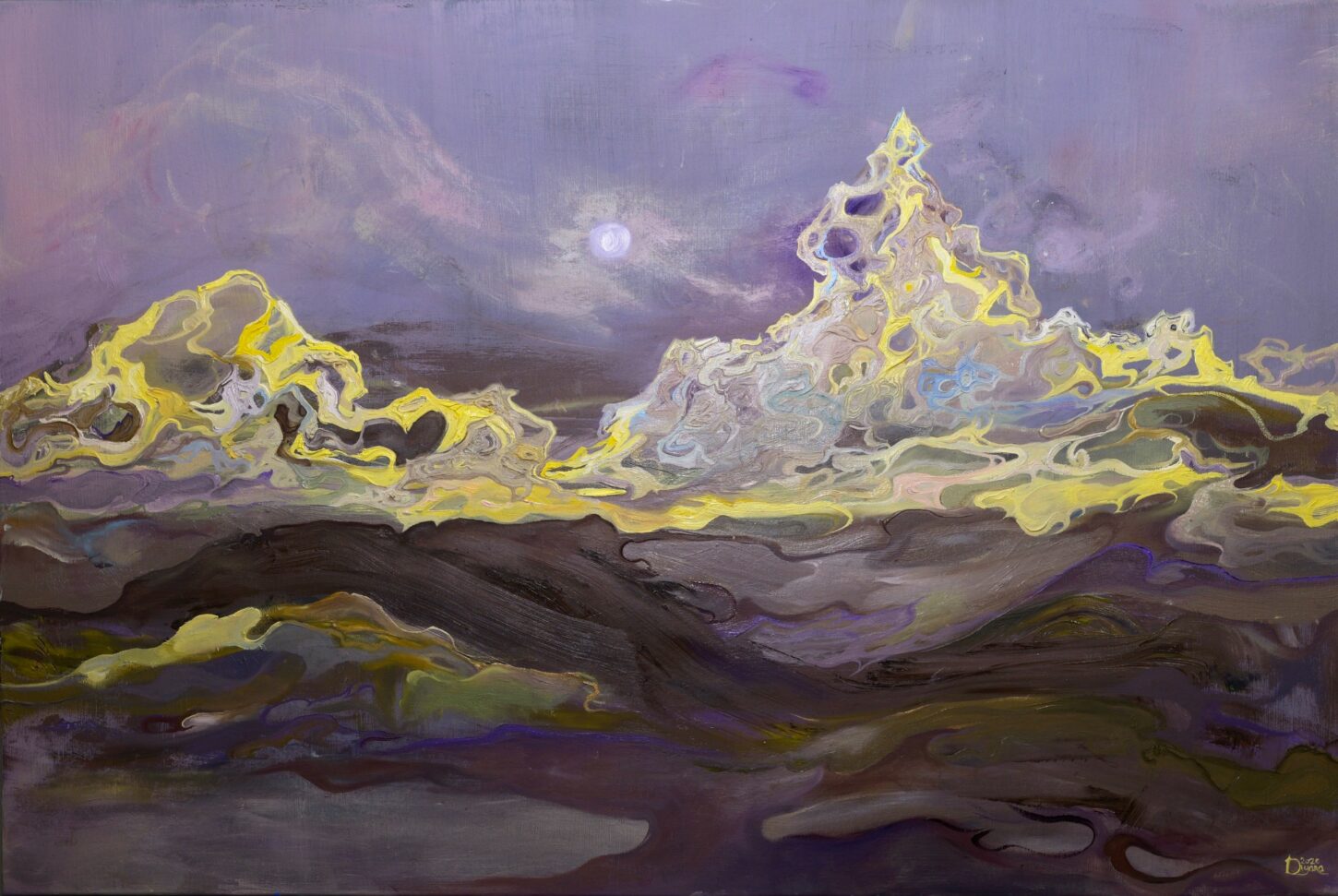
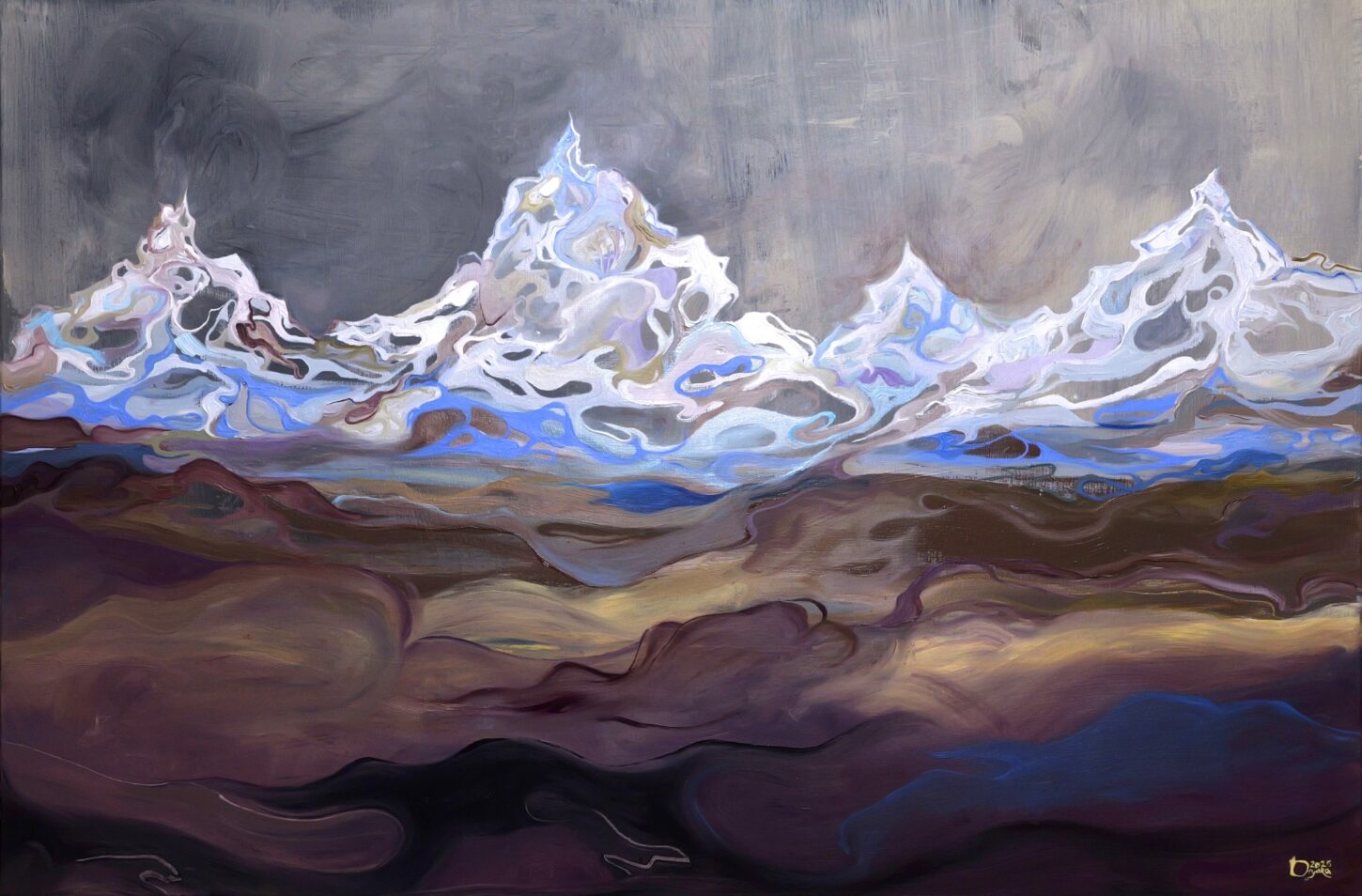
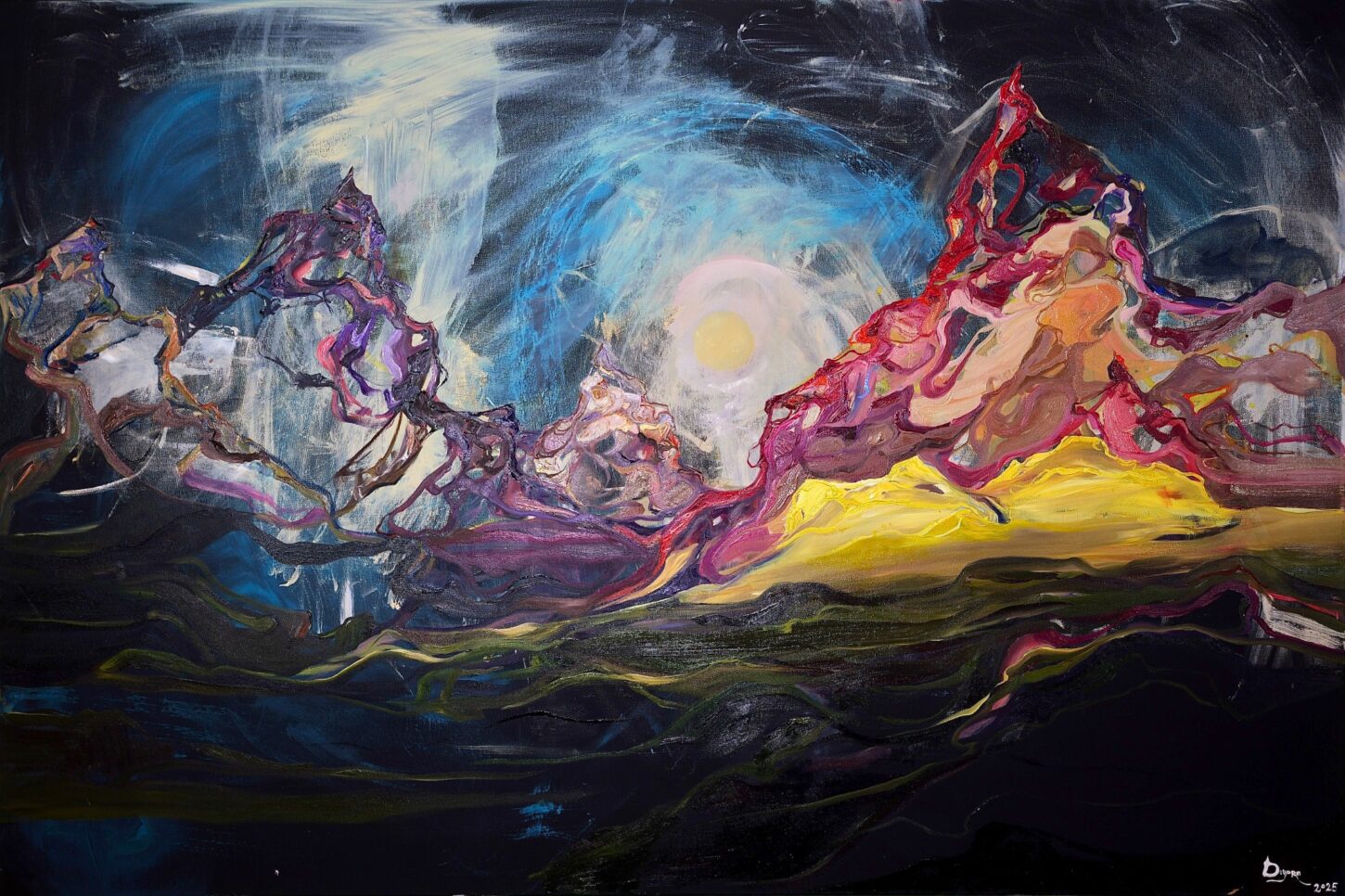
Earthspine is the terrain. Its mountains are shaped by memory, belonging, protection, separation, and endurance — but they are not documentary landscapes. They are remembered and invented, which is to say they are true in the way that myths are true. The Kurdish highlands flicker beneath their surfaces, yet the paintings refuse to be reduced to topography. A ridge line here is a spine; a valley there, a held breath. This is landscape as testimony: the earth itself keeping the record that history tries to erase.
Fleshline is the life that inhabits that terrain. Figures and animals move through these canvases with lives that extend, unmistakably, beyond the frame. They resist explanation. They decline to become symbols of identity, of suffering, of history — the categories into which art about displacement is so often pressed. A hunter watches; an animal holds its ground; a figure turns half toward us and half toward something we cannot see. The partiality is the point. These are glimpses, not declarations, into a reality whose rules remain partly hidden.
Together, the two series give one world its terrain and its life — and, crucially, they leave room for that world to keep growing.
Memory, Kurdish inheritance, and displacement inform this work. But Diyara is not a painter of loss. Her practice makes a quietly radical claim: that she seeks imaginative possibilities beyond those histories. This is the distinction that separates testimony from grievance. She does not paint in order to mourn a place she cannot return to; she paints in order to build a place that cannot be taken — one whose mountains cannot be redrawn by any border commission.
In this sense, her world resembles the Kurdish tradition of oral storytelling more than any school of landscape painting. Stories were carried, not archived. Figures recur; meanings shift with each telling; the map is held in the mind. Earthspine and Fleshline feel like painted equivalents of that transmission — fragments of an epic still being composed, under no obligation to conclude.
There is also the matter of the colour itself. Diyara’s paintings are colour-led: hue is not decoration but syntax. The ochres and mineral blues, the deep oxidised greens of her terrain, warm flesh-tones set against cool distance — these are decisions made by instinct, but instinct sharpened by inheritance. For a painter who lives between languages and between countries, colour has become a mother tongue: the register in which she is most fully understood, and through which she understands most fully.
Her figuration, similarly, avoids the trap of the exotic. Her figures do not perform their otherness for the viewer. They simply exist — animated, interior, sovereign — and it is the viewer who is granted permission to look.
The recent trajectory of her career suggests a practice gathering momentum. In 2024 she showed in a group exhibition at Kunstraum, London. In 2026 her work appeared in Collective Voices, a group exhibition hosted by JustArt Collective at White Space Gallery, Edinburgh — work documented in the accompanying publication by JustArt Newspaper Club. Her painting Silent Hunter (2025) was selected for MEGA 2026, an international online presentation with Biafarin, carrying her imagined world before a global audience.
She also writes about her own practice — a rare and valuable habit among painters — giving her canvases a critical framework in her own words rather than only in the words of others.
What lingers after encountering Diyara’s work is not melancholy but endurance. The mountains of Earthspine have absorbed what was suffered, and they continue to stand. The beings of Fleshline have outlived every attempt to explain them. Her imagined world is not an escape from history but a rejoinder to it — a territory where memory is a creative force rather than a burden, and where a Kurdish painter in London can chart a homeland that exists nowhere except in colour, and therefore exists everywhere.
The world she is building is unfinished. That is its greatest strength. We are not looking at a completed landscape; we are looking at the beginning of one.
Photo credits: Artist’s archieve
Leave a Reply