
From 8 September to 15 November, the Eternal City once again becomes the beating heart of contemporary performing arts as the Romaeuropa Festival (REF2026) returns for its 41st edition. Over the course of more than two months, the festival will bring together more than 1,000 artists from across the globe, staging approximately 100 performances across some 240 individual shows — a remarkable feat of production and curation that cements REF’s position among Europe’s most ambitious and enduring cultural festivals.
These performances will unfold across 20 of the capital’s most prestigious theatres and venues, from the historic Teatro Argentina to the modern Auditorium Conciliazione, weaving a geographic and artistic tapestry that spans the breadth of Rome. The sheer scale of the event is a testament not only to the festival’s organizational mastery but also to its deep, long-standing relationships with the city’s cultural infrastructure.
This year’s edition carries a particularly meaningful symbolic weight, as it coincides with the celebration of the 75th anniversary of diplomatic relations between Italy and Germany. In honor of this milestone, REF2026 has forged close collaborations with the German Embassy in Rome and the Goethe-Institut, weaving a thread of cultural exchange and shared heritage through the program. This emphasis reflects the festival’s enduring conviction that the arts are among the most powerful vehicles for mutual understanding between nations — a belief that resonates now more than ever in a Europe seeking common ground through culture.
The REF program is characteristically eclectic, spanning the disciplines of dance, music, theatre, and digital arts with a curatorial vision that prizes both artistic excellence and bold innovation.
The festival opens on 8 September at the Auditorium Conciliazione with a double bill of dance by Sofia Nappi and her company KOMOCO. The program features Chora – Il vuoto all’origine, a work that draws its title from the Platonic concept of chora — the formless, primordial receptacle from which all creation emerges — alongside DODI. Nappi’s choreography, marked by its physical intensity and philosophical depth, sets a contemplative yet electrifying tone for the weeks to come.
The music strand of the festival is nothing short of stellar, offering audiences encounters with some of the most distinctive voices in contemporary sound.
On 9 September, audiences will be treated to the hypnotic, spectral electronics of Caterina Barbieri, the Italian composer whose work with modular synthesis and artificial intelligence has earned her international acclaim as one of the most visionary figures in experimental music. Her performances, at once austere and rapturous, explore the intersection of technology, spirituality, and human emotion.
The festival then welcomes the luminous Malian singer-songwriter Fatoumata Diawara on 15 September, whose music fuses the traditions of Wassoulou with contemporary pop, jazz, and blues — a voice of warmth, power, and rare communicative immediacy.
One of the undoubted highlights arrives on 16 September with the legendary Philip Glass Ensemble, which will perform live alongside a screening of Powaqqatsi, the second film in Godfrey Reggio’s celebrated Qatsi trilogy. This extraordinary marriage of minimalist orchestration and visionary cinematography — an immersion in the lives and labors of the Global South — remains one of the most potent audio-visual experiences in contemporary art.
The following evening, 17 September, brings the pioneering techno artist Jeff Mills to the stage. A figure who helped define the sound of Detroit techno and who has continually pushed the genre into ever more conceptual and avant-garde territories, Mills is a fitting representative of electronic music’s restless, forward-looking spirit.
The festival’s theatrical and choreographic programming features leading international figures whose work has shaped the contemporary stage.
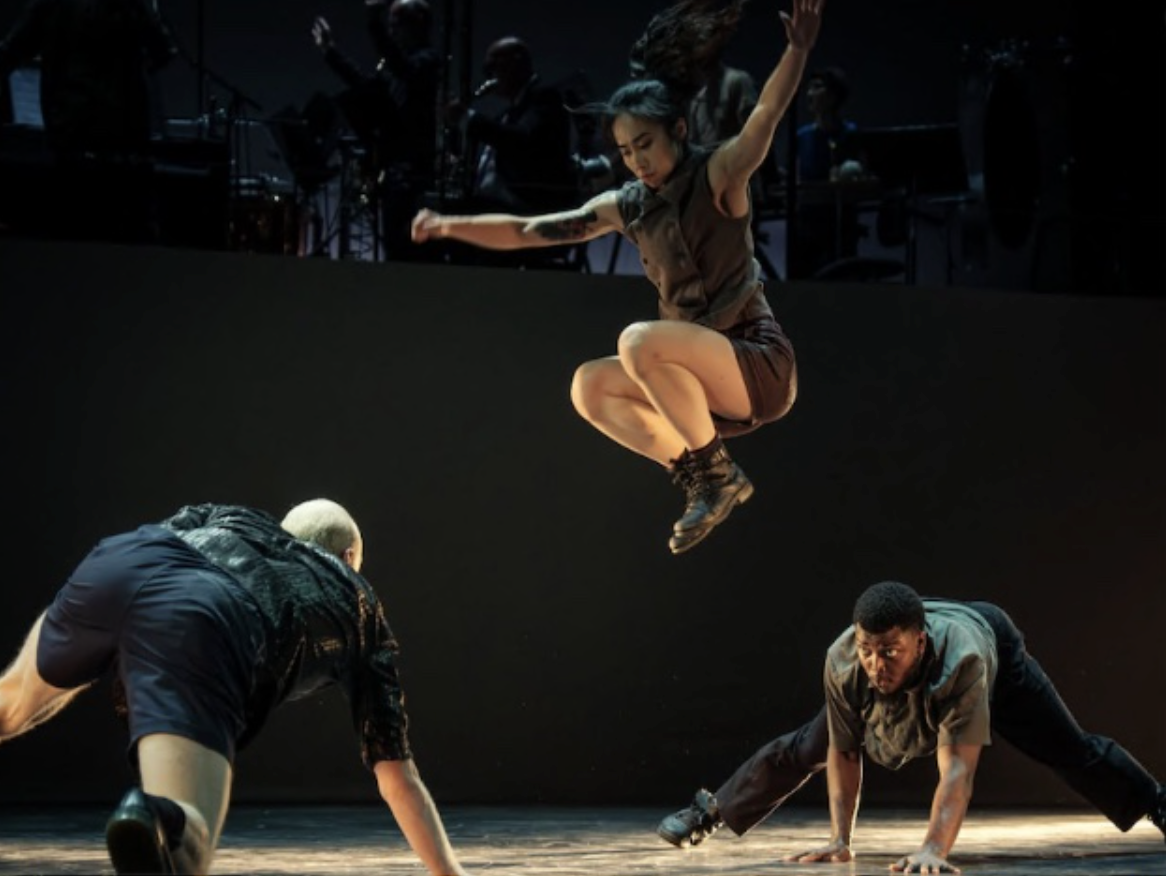
Belgian choreographer Wim Vandekeybus, founder of the company Ultima Vez, brings his distinctive, risk-laden movement vocabulary to the Teatro Argentina on 8–9 October. Vandekeybus’s work, which has long explored the boundaries between dance, theatre, and film, promises moments of breathtaking physicality and raw emotional honesty.
French dancer and choreographer Benjamin Millepied, celebrated for his work as director of dance at the Paris Opera and for his collaborations in contemporary cinema, appears on 14 September, offering audiences a glimpse of his refined yet adventurous choreographic language.
On the theatrical front, the festival presents Memoria di ragazza (translated from Annie Ernaux’s acclaimed memoir Mémoire de fille), a stage adaptation of the Nobel laureate’s unflinching account of adolescence, desire, and self-discovery, directed by Silvia Costa. Costa’s sensitive, formally inventive direction promises a faithful yet bold rendering of Ernaux’s spare and devastating prose.
Among the most anticipated events of the season is a singular homage to one of the most iconic recordings in the history of improvised music: The Köln Concert by Keith Jarrett. This legendary, near-mythical piano performance — captured live in 1975 and beloved as one of the best-selling instrumental albums of all time — will be reinterpreted in a special performance by pianists Maki Namekawa and Thomas Enhco. Their “re-readings” of the work promise to honor Jarrett’s spontaneous genius while suffusing it with their own distinct sensibilities, offering longtime devotees and newcomers alike a fresh lens on a timeless masterpiece.
The driving force behind this monumental undertaking is the Fondazione Romaeuropa, one of the most prestigious institutions in Italy and across Europe for the promotion and diffusion of contemporary art, theatre, dance, and music.
The Foundation’s origins trace back to 1986, when it was established as the Associazione degli Amici di Villa Medici (the Association of the Friends of Villa Medici), born of a pioneering Franco-Italian initiative. Villa Medici — the historic seat of the French Academy in Rome, perched above the city from the Pincian Hill — provided a fitting symbolic birthplace for an organization dedicated to cross-cultural artistic dialogue.
Over the subsequent decades, Romaeuropa has grown far beyond these beginnings. Today it stands as a dynamic engine of cultural production and diffusion, operating through a vast network of both international and local partners, spanning cultural institutions, governmental bodies, theatres, and independent artists. The Foundation’s work extends well beyond the annual festival itself, encompassing year-round programs of support, residency, commissioning, and audience development that nourish the contemporary arts ecosystem in Rome and beyond.
This deep-rooted institutional strength is precisely what allows REF to continue, year after year, to be not merely a showcase of finished works but a genuine laboratory of creation — a place where new art comes into being and where established and emerging artists find a platform of international visibility.
The festival’s enduring relevance lies in its role as a true crossroads of global culture. At a moment when the arts are called upon to build bridges across languages, borders, and traditions, Romaeuropa embodies the conviction that culture is a shared inheritance and a common language. By importing the finest work from around the world into the heart of Rome, and by nurturing the work of Italian artists destined for international stages, the festival participates in a continuous, reciprocal exchange that enriches all who take part.
The full program, along with detailed schedules, artist biographies, and contextual material, is available through the official Romaeuropa website. Tickets for all performances may be purchased online and through the Vivaticket circuit, ensuring that audiences near and far can secure their place at one of the most eagerly awaited cultural events of the autumn.
Photo: Official Facebook page of the Romaeuropa Festival – REF2026.
Leave a Reply