

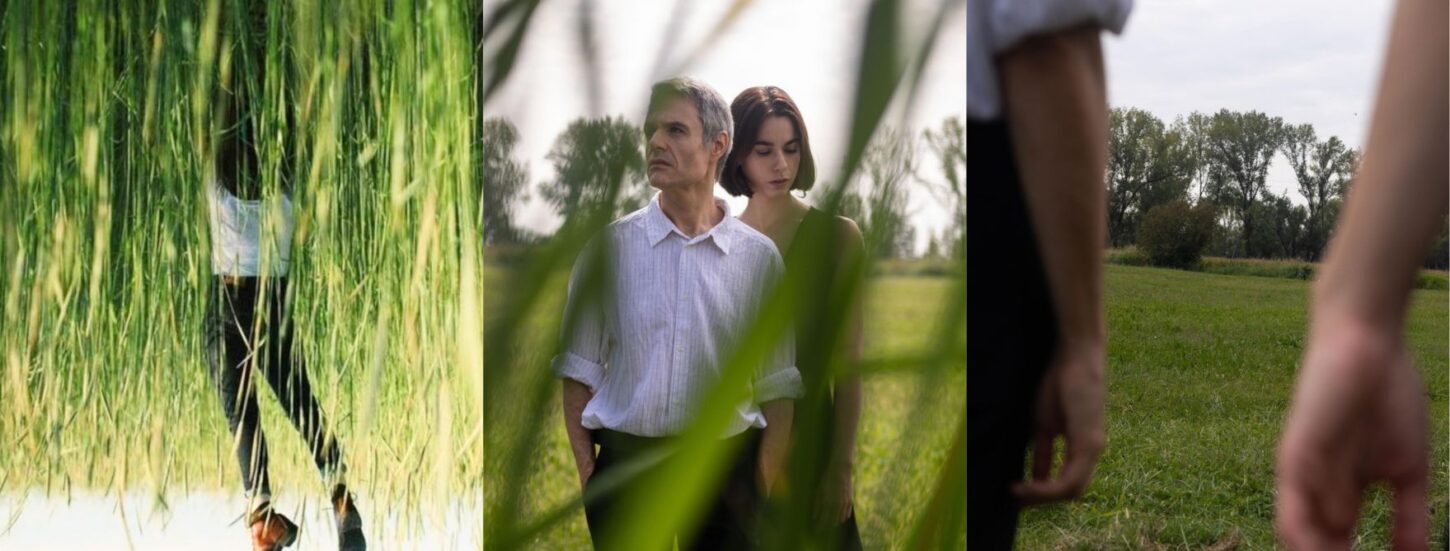
The Museo Bagatti Valsecchi presents La casa in collina, a new theatrical production adapted from Cesare Pavese’s celebrated novel, as part of its cultural programme “Stasera al Museo. Lasciami mezz’ora per vedere”. Running from 14 to 18 October 2026 for five performances in the museum’s Salone d’Onore, the show marks the first-ever stage adaptation of Pavese’s novel. Directed by Mario Scandale, with a theatrical adaptation by Giulia Bartolini and performances by Noemi Apuzzo and Christian La Rosa, it is the fifth production created by the museum and the second of its 2026 season.
The project was realised under the scientific supervision of the Fondazione Cesare Pavese and grew out of a research process developed during the 48th edition of AstiTeatro, marking the first collaboration between the museum and the festival dedicated to contemporary theatrical research. The work originated in a five-day artistic residency held last June, which included an immersion in Pavese’s world through visits to the Casa Museo in Santo Stefano Belbo and the Archivio Storico in Asti. A staged reading proved a key milestone in the creative process, allowing the artists to refine the dramaturgy before the final production — with particular attention devoted to reshaping the character of Cate as a concrete, combative woman, at once fragile and powerful.
Set in the summer of 1943, the story follows Corrado, a Turin professor who retreats to the hills above the Po to escape the wartime bombings. There he encounters Cate, a youthful love, and her son Dino, whose paternity he suspects. As the war renders every form of neutrality impossible, Corrado is forced to confront the weight of his responsibilities — towards the child, towards history, and towards himself. “Lasciami mezz’ora per vedere” (“Give me half an hour to see”), the guiding theme of the museum’s 2026 programme, invites audiences to slow their gaze and let art question them; the production fits squarely within this horizon, reviving the urgency of Pavese’s questions about how a human being reacts when war bursts into their life.




The adaptation retains the ethical and existential core of the novel while translating it into a contemporary two-character dramaturgy. At its centre are Corrado and Cate, two opposing ways of moving through the war: while Cate gradually chooses to take part, Corrado observes, doubts and seeks in the hill a distance that might protect him from History — a distance that becomes impossible to maintain as the conflict intensifies. Where Futurism once celebrated speed and modernity, the production restores the suspended time of waiting, inaction and the difficulty of seeing before choosing. Through dialogue, memories and confessions addressed to the audience, the war enters the most intimate dimension of the characters’ lives, without offering answers or judgements.
Director Mario Scandale explained that the adaptation stems from a single hypothesis: what if an older Dino, having survived the conflict, were to meet Corrado and ask him what a man must do when war arrives? “The entire staging is an attempt to remain inside that question,” he said. “Corrado speaks to the audience as if speaking to a son, to those who come after him and who ask him to account for his choices.” He noted that the protagonist’s search for the right distance from the war — “close enough to the fire to feel its heat, far enough not to burn” — mirrors a broader condition of those who struggle to take on responsibility towards the generations to come. The staging will be essential, built on gestures, voice and bodies, with the Salone d’Onore’s furnishings and memory serving as a natural counterpoint.
Dramaturg Giulia Bartolini emphasised that La casa in collina is political not in the sense of taking sides or building heroes, but because it asks a question about individual responsibility: what do we do when History asks us to take part? “In the adaptation we moved this question from thought to action, to see what it produces on bodies and relationships,” she said, adding that the team worked through Pavese’s language, preserving its register, rhythm and capacity to hold together the everyday and the reflective, and delivering the question intact to today’s spectators: “a testament for us and for those who will come after us.”
Museum Director Antonio D’Amico affirmed that the production confirms the museum’s desire to use theatrical language to reach an ever broader and more diverse audience: “Imagining the Museum as a place that produces cultural content allows us to guard and give beauty, offering everyone a small refuge for the soul in which to feel at home. Our challenge is to bring these activities beyond our walls, reaching fragile audiences so that culture becomes a benefit for all.” The programme is supported by partners including Altemasi Trentodoc, Amaro Alpino and Valverde.
More than a rereading of the novel, La casa in collina treats Pavese’s work as a testament: a question handed down to future generations about what it means to remain human when war enters our lives and forces us to choose. In this sense, the Museo Bagatti Valsecchi — a space devoted to the preservation and transmission of memory — provides its natural setting, where art becomes an instrument for interrogating the present and our relationship with what we choose to keep.
Leave a Reply