

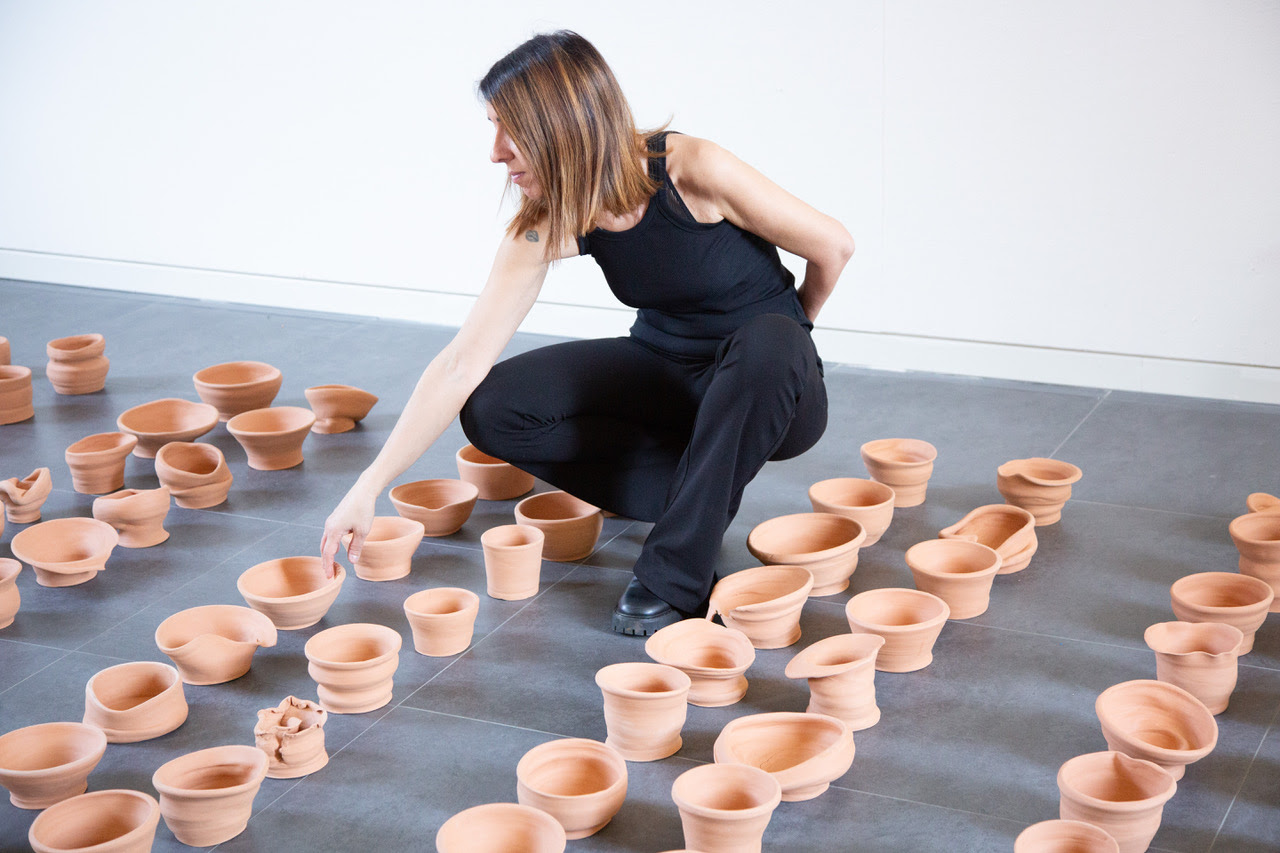
ANCONA, November 18, 2026 — The Museo Tattile Statale Omero in Ancona has announced the winner of the second edition of the Premio Omero: “Questo è un orto!” (2026, “This Is a Vegetable Garden!”) by Lucia Cappellazzi, a sculptural installation of 120 ceramic vases that will enter the museum’s permanent collection. The award — promoted by the Direzione Generale Creatività Contemporanea (DGCC) of the Italian Ministry of Culture together with the Museo Omero — rewards contemporary works that are multisensory and inclusive, expanding access to and participation in the artistic experience.
The winning work will be acquired by the museum and inaugurated on December 12 at 5 pm, in the presence of the artist, members of the jury and institutional representatives. Cappellazzi will receive a prize of 20,000 euros, as set out in the call for entries.
Composed of 120 vases, each thrown individually on the potter’s wheel using only one arm and arranged on wooden bases in a configuration recalling a domestic vegetable garden, the installation convinced the jury for a research capable of uniting plastic experimentation, expressive spontaneity and a deeply human, emotional dimension.
In the work the jury recognised a particular freshness and authenticity, and an attitude that celebrates imperfection as an element of beauty and meaning. Central to the proposal is the implicitly performative dimension of the artistic gesture, which emerges in the process of working clay on the wheel and gives the piece an additional layer of expressiveness. Cappellazzi’s practice thus transforms limitation into creative possibility, shaping a personal, sensitive and profoundly evocative language.
The choice also reflects the jury’s will to recognise and sustain an original artistic research, offering new opportunities of visibility to an artist whose path “has not yet found adequate attention within the art system.”
Cappellazzi’s research investigates care, limitation and transformation, between order and what escapes control. Through simple, repeated gestures she builds series, structures and real or imagined — often inhabitable — spaces, drawing repeatedly on the rural world, agricultural practices and the relationship with animals.
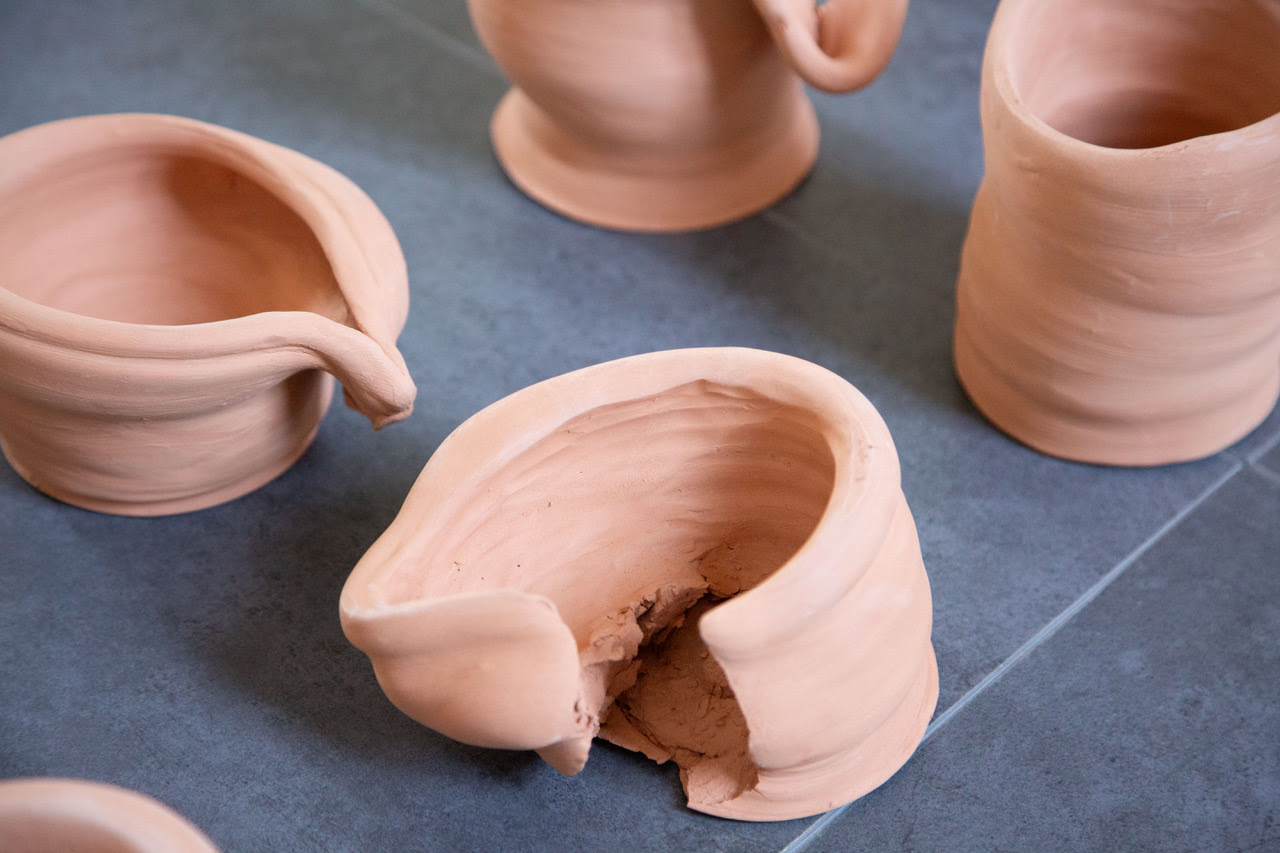
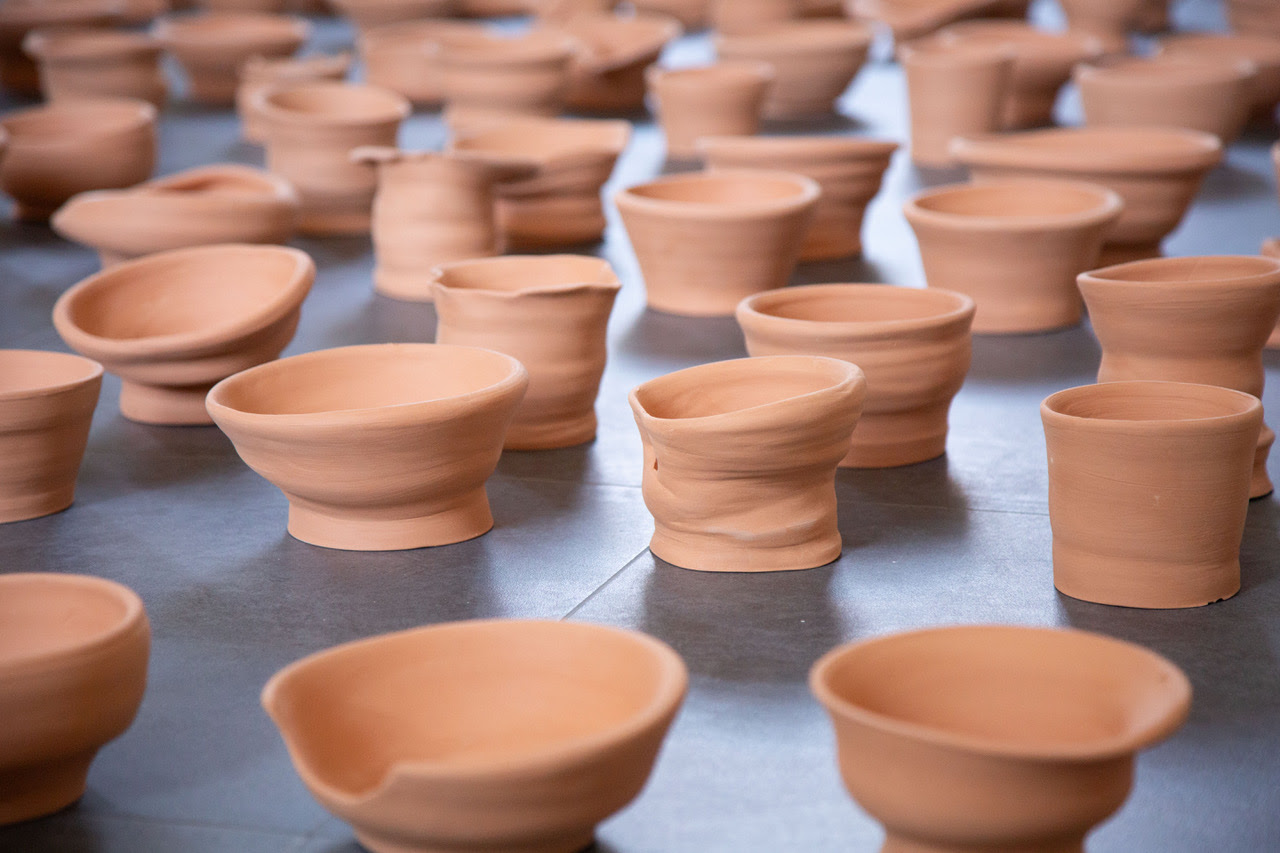
In “Questo è un orto!” each of the 120 vases is different from the others: irregular forms, asymmetries and imperfections record the process of working the clay and preserve the traces of the gestures that generated them. The vases are arranged in 8 rows of 15, recalling the prode — the strips of soil destined for cultivation — while the aisles are the spaces where one moves to care for the plants. To explore them, visitors must bend down, just as a gardener does when working the earth.
The vessels open upward: some are regular, truncated-cone or cylindrical; others are pinched at the middle, tilted, deformed, squashed or collapsed. Some have lost their original shape and bear breaks, scars or chips. They are deliberately empty, ready — ideally — to receive seeds, plants, roots and new possibilities of growth. The garden thus becomes a metaphor for care, transformation and diversity understood as a value.
Touch is an integral part of the artistic experience. The installation is conceived to be explored directly through contact with the ceramic, recognising forms, volumes, surfaces and the differences between individual elements. Touching the vases in sequence allows visitors to retrace the gesture at the wheel — its attempts, failures, falls, successes and recoveries.
The work will be installed with a fully accessible communication setup, including a subtitled video in Italian Sign Language (LIS), Augmentative and Alternative Communication (CAA), a Braille caption, an easy-to-read guide and audio description for blind visitors — in full harmony with the mission of the Museo Omero.
«My research investigates the themes of care, limitation and transformation, moving within the tension between the need to create order and what escapes control,» the artist explains. «Through the repetition of gestures I create patterns and real or imaginary spaces, at times drawing from the agricultural world, which I use to question what appears already defined, and to imagine new perspectives and new ways of perceiving what surrounds us.»
Photo credits: The Museo Tattile Statale Omero in Ancona
Leave a Reply