
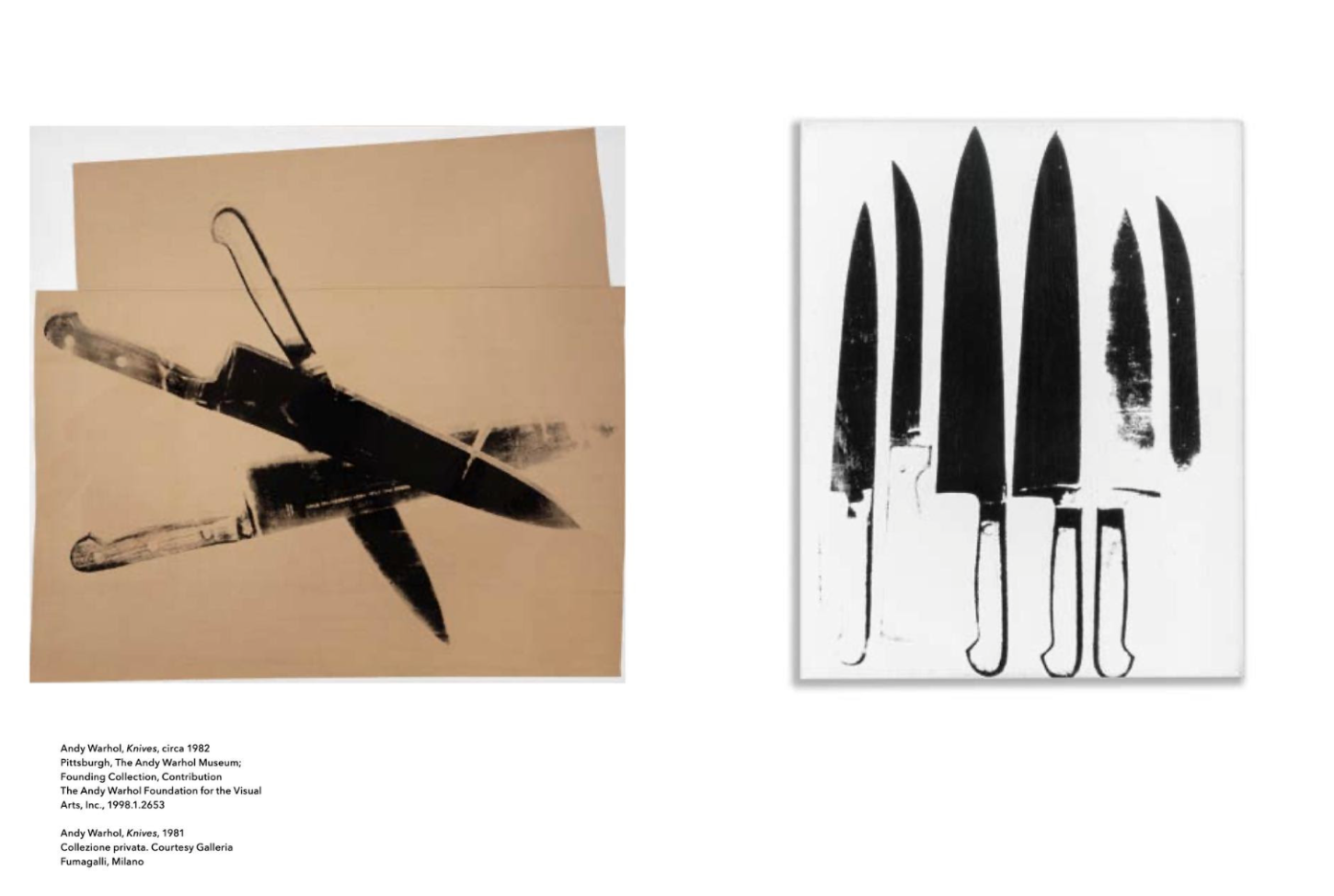
Presentation: 6 November 2026, 5:00 PM — Accademia di Belle Arti di Brera, Sala Napoleonica, Milan. Galleria Fumagalli and Dario Cimorelli Editore present Kounellis | Warhol. La messa in scena della tragedia umana: la classicità di Jannis Kounellis e il pop di Andy Warhol (The Staging of Human Tragedy: The Classicism of Jannis Kounellis and the Pop of Andy Warhol), a project conceived by Annamaria Maggi.
The publication grew out of the exhibition of the same title held at Galleria Fumagalli in Milan (26 November 2025 – 29 May 2026), accompanied by a complementary display at the Museo San Fedele (12 December 2025 – 29 May 2026). The book develops and deepens the exhibition’s premises through an extensive critical, documentary and iconographic investigation into the possible dialogue between two apparently irreconcilable masters of art.
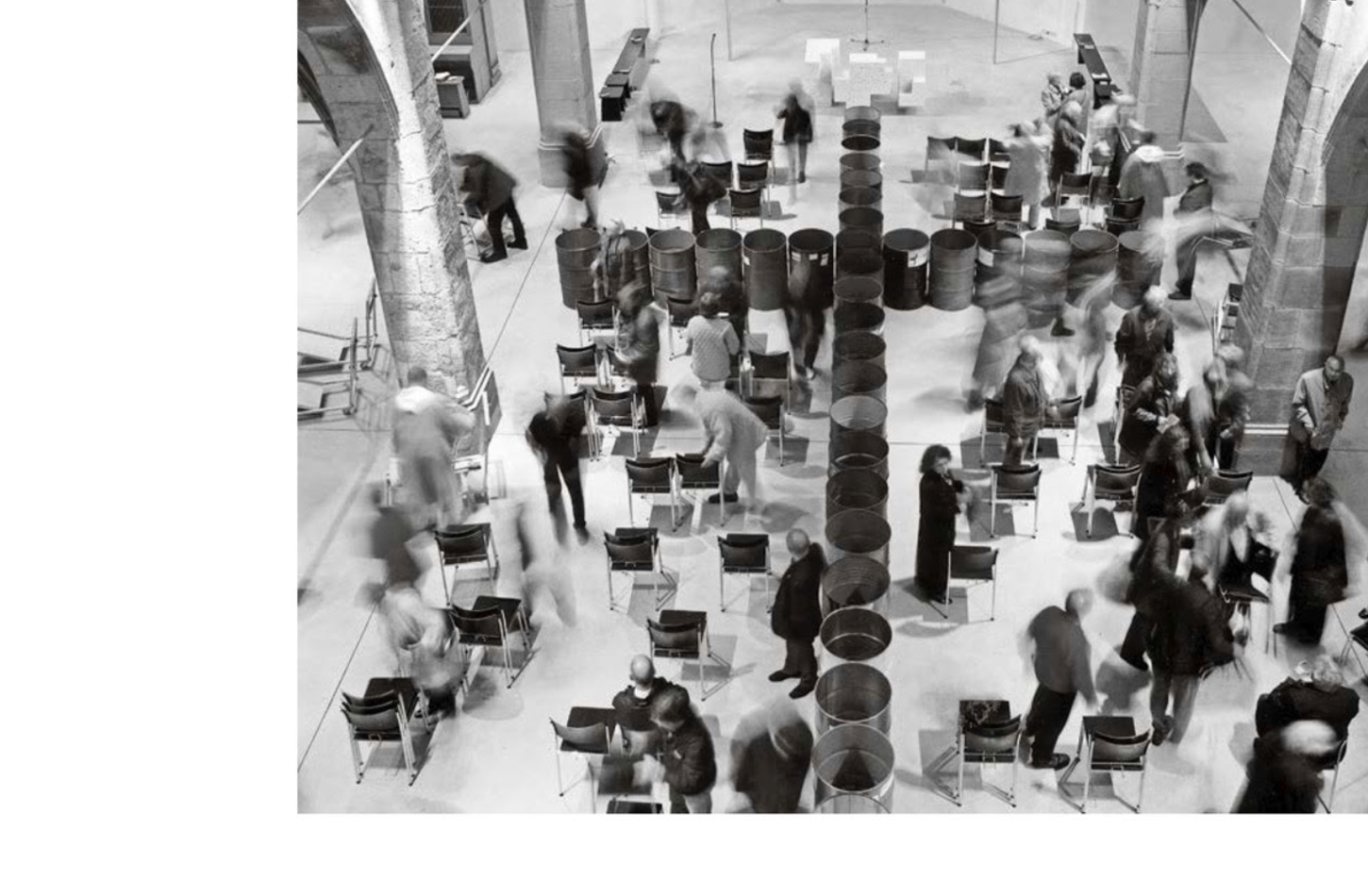
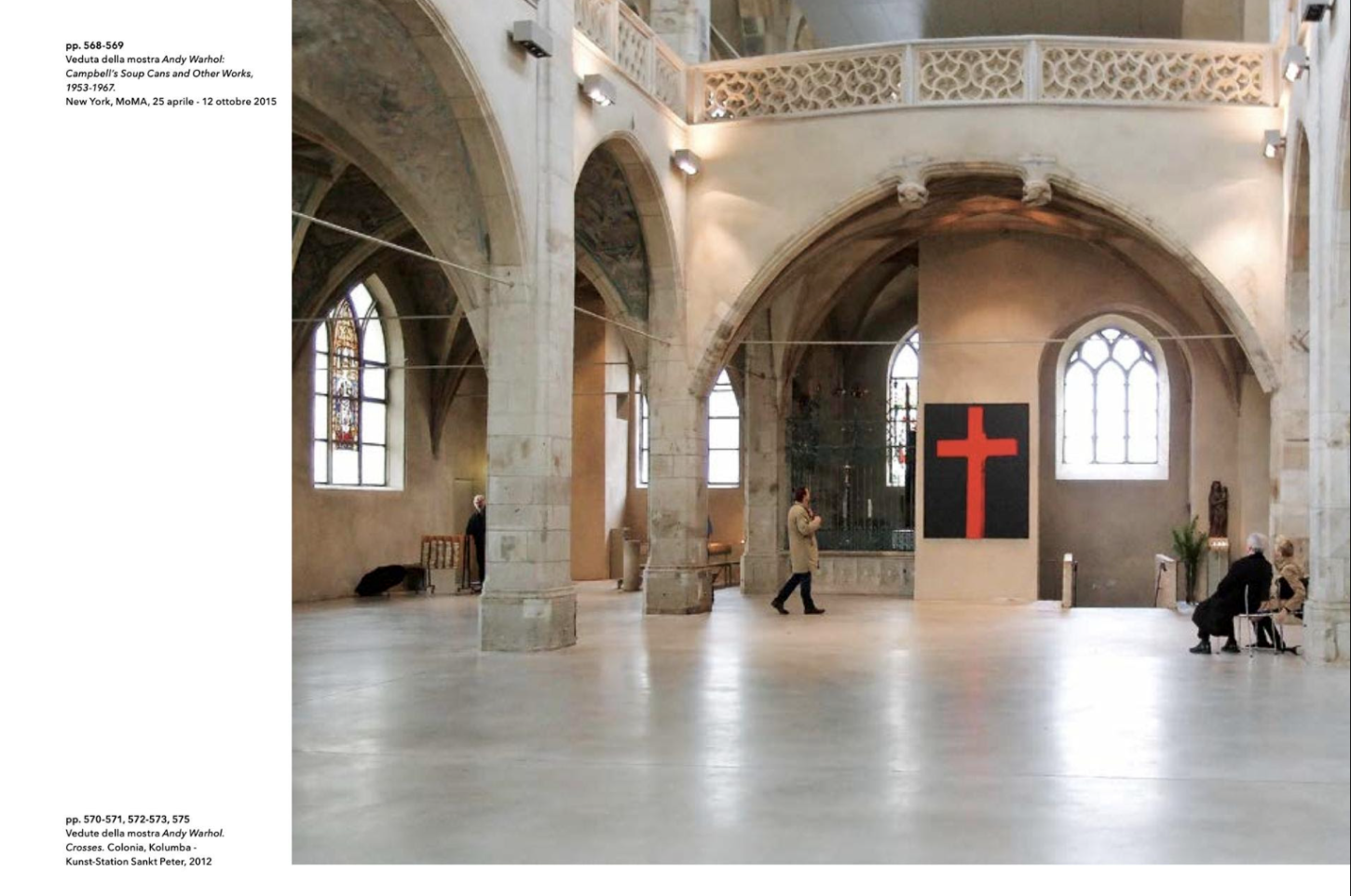
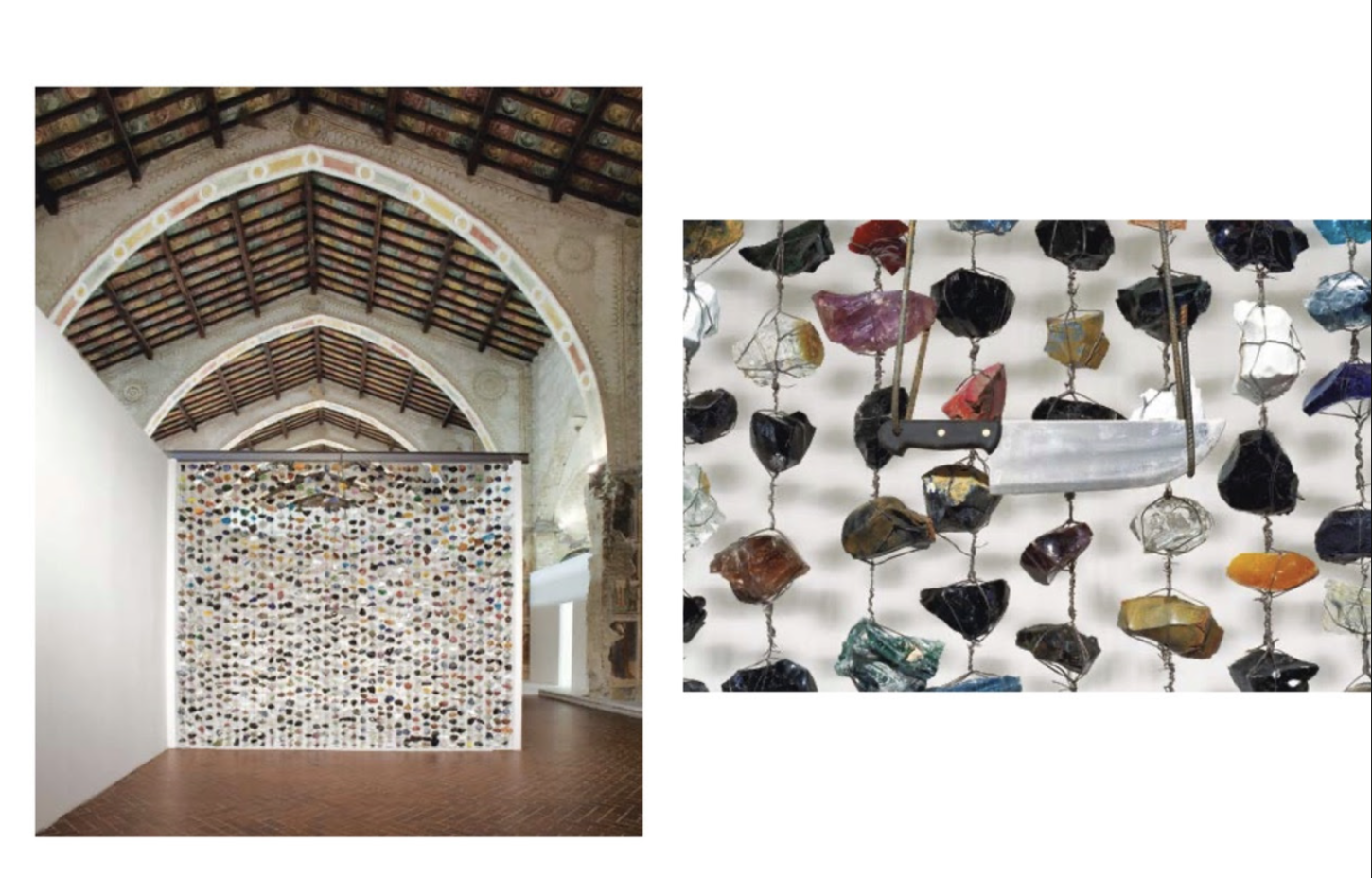
The two artists left an indelible mark on the history of contemporary art. They seem to represent two extremes—alpha and omega, two visions of the world and two profoundly different poetics. On one side, shadow, the weight of matter, memory and tragedy; on the other, the luminosity of the surface, repetition, the image and the language of mass culture.
Yet it is precisely in the distance between these two artistic experiences that the possibility of a dialogue emerges. In a twentieth century marked by the rise and crisis of ideologies and certainties, art became for both the arena in which to engage with the great questions of humanity, death, memory and transcendence.
As the writings and images gathered in the volume demonstrate, Kounellis and Warhol appear to meet in a shared necessity: that of giving body and face to the mystery of existence, and of interrogating through art the human condition and the possibility of finding meaning in tragedy. The comparison therefore arises neither from a search for resemblance between the two artists nor from an attempt to assimilate such different poetics, but from the desire to understand how two apparently opposing languages can confront some of the fundamental questions of existence: life and death, memory, faith, the image, the sacred, and the transformation of the everyday.
Building on Galleria Fumagalli’s deep familiarity with the work of Jannis Kounellis, with whom the gallery collaborated from 2003 until his passing in 2017, the project offered an opportunity to launch a broader investigation into the figure of Andy Warhol and the cultural and spiritual roots of his work.
The research unfolded through a residency in Pittsburgh, with visits to the sites of Warhol’s formation—including his Byzantine Rite church and the urban context of his origins—and through direct encounters with figures who knew the artist and his circle at first hand.
Particular importance was attached to the dialogue with The Andy Warhol Museum, through its director Mario R. Rossero and archivist Matthew Gray, as well as a meeting in New York with Vincent Fremont, active at the Factory during the 1970s. This research made it possible to probe the divergence between the European and American reception of Warhol’s work, revealing the complexity of an artist often identified solely with pop culture and the surface of the image, yet whose formation is rooted in a deeper cultural and religious heritage.
These investigations and encounters confirmed the strong bond both artists maintained with their cultural roots: Orthodox, Mediterranean Greece for Kounellis, and the Ruthenian, Christian-Byzantine tradition of his Slovak family for Warhol.
In both, this Eastern Christian substratum resurfaces through the dimension of the icon—not merely a symbol or an image, but a presence capable of keeping open a tension toward the absolute. It is precisely in the dimension of the icon that the confrontation between Kounellis and Warhol acquires particular intensity. The religious icon, the image of death, the face, repetition, the celebration of celebrity, the transformation of the everyday object into image: these become, in the work of the two artists, different ways of interrogating the relationship between the visible and the invisible, presence and absence, the individual and the collective.
The dialogue between Kounellis and Warhol thus takes shape neither in stark opposition nor in the assimilation of their poetics, but in the possibility of recognizing—through their very distance—a common need to find in art a form of sacrality of the everyday and a new possibility of meaning.
The book stems from a series of conversations with scholars and critics invited to engage with this working hypothesis, and brings together previously published essays alongside texts written expressly for the occasion.
Contributors include Paolo Balmas, Maria Vittoria Baravelli, Sandro Barbagallo, Luca Massimo Barbero, Jean Baudrillard, Bob Colacello, Andrea Dall’Asta SJ, Arthur C. Danto, Franco Fanelli, Lóránd Hegyi, Lorenzo Madaro, Annamaria Maggi, Christopher Makos, Gianni Mercurio, Patrick Moore, Daniela Morera, Demetrio Paparoni, Massimo Recalcati, John Richardson and Guido Schlimbach, together with interviews with Jannis Kounellis by Antonio Gnoli, Raffaella Iannella and Willoughby Sharp.
As evidence of the investigation conducted directly in the United States, the volume also publishes interviews conducted by Annamaria Maggi with Vincent Fremont, Gerard Malanga, and Mario R. Rossero, director of The Andy Warhol Museum, joined by archivist Matthew Gray.
The publication is completed by a substantial photographic apparatus, conceived as a curated visual biography of the two artists. The images were made by some of the foremost photographers who documented their careers, including Ugo Mulas, Claudio Abate, Paolo Mussat Sartor, Giorgio Colombo, Aurelio Amendola, Manolis Baboussis, Carlo Orsi and Duane Michals.
The book also gathers images from prestigious international institutions and archives, including The Andy Warhol Museum (Pittsburgh), The Brant Foundation (New York), DIA Art Foundation (New York), Magazzino Italian Art (Cold Spring, NY), Fondazione Prada (Milan), Fondazione Arnaldo Pomodoro (Milan), the Archivio Amelio-Santamaria (Naples) and the Documenta Archiv (Kassel).
Through essays, interviews, testimonies and images, Kounellis | Warhol renders not only the distance between two artistic worlds, but also the unexpected correspondences that run through them: the relationship with tradition, the persistence of the icon, the dimension of death and memory, the transformation of the image and—more profoundly—the necessity for art to confront the human tragedy.
Leave a Reply